Showing posts with label paranormal. Show all posts

Thursday, October 20, 2022

Investigation of Skinwalker Claims Leads to Uintah County Offices

    The beginning of the latest article at Expanding Frontiers Research, titled 'Uintah County Paid Tens of Thousands to PhenomeCon Speakers':

    Financial records obtained from Uintah County indicate it spent over $133,000 on the 2022 PhenomeCon while raising about $124,000 in revenue, compiling a reported debt of some $9,000 for sponsoring the paranormal-themed conference. The inaugural 2021 PhenomeCon likewise tallied over $74,000 in payouts while collecting about $59,000 in revenue, finishing some $15,000 in the hole. Expenses for the two conferences, confirmed to be sponsored by Uintah County, include tens of thousands of dollars in payments to dubious speakers and catered “VIP” meals in which unsupported rumors were spread of dangerous paranormal phenomena. Payouts also include workshops promoting such topics as Remote Viewing and payments for rental car reimbursements. During the 2022 PhenomeCon, payments issued for speaking engagements, consultation services, and appearances at events totaled over $60,000, while hotel chains were paid in excess of $10,000, according to the financial reports.

Expanding Frontiers Research (EFR) obtained the information through public records requests submitted to the Uintah County offices of the Clerk-Auditor and Travel and Tourism. The requests were submitted as part of a joint effort between this writer and EFR Director Erica Lukes, who contributed substantial research to this article.


Tuesday, February 9, 2021

Discerning Truth

    Misinformation needs no introduction. You've seen it around, and a lot of it piggybacks on fringe subject matter. Sensationalism is a staple of the UFO genre. It can be argued that has to be accepted as the case before meaningful discussion becomes possible.

I asked a few writers and podcasters familiar with UFOs and similar subject matter if they would share some thoughts on how we explore such topics without getting overwhelmed in false information. How do we know what's true and what's not? How do we keep an open mind without making ourselves vulnerable to lies, opportunists, and cult-like thinking?

Sarah Scoles is a science journalist and writer of many articles published at outlets such as WIRED Science and Popular Science. She is the author of the books Making Contact: Jill Tarter and the Search for Extraterrestrial Intelligence and They Are Already Here: UFO Culture and Why We See Saucers. Sarah replied in response to my request for a contribution for this blog post:

    A story is just a story. No matter how compelling someone’s sighting or experience, it is just that: theirs. Human minds and memories are fallible things, especially when they're encountering something outside their everyday experience, and regardless of their owners’ expertise or power. No one interprets or recalls sensory input objectively. So as meaningful as a story may be to a person, that significance does not itself constitute evidence that their interpretation is correct. 

Second, consider the source. What organization or individual made this information public? How do they stand to benefit from its dissemination? What might their motivations be? Who pays ’em? How might all of that affect their coverage? 

Third, dig into the attribution. Are sources anonymous, and do the authors give a justification for why, or describe the vetting that ensures these mystery people are legit? Many mainstream publications have public policies on the use of such sources (many independent sites do not—but you can always ask). Even if the source is legit, ask what their motivation is for talking. 

Next, look at how much the piece relies on the word of its sources (turns out, people can say pretty much anything they want!), versus harder, more verifiable evidence. For example “Aliens landed on the White House roof, according to a guy who says he saw it happen” versus “four people who described the same thing independently” versus “security footage and genetic analysis” versus “a declassified document.” 

Speaking of documents, do the authors/producers link to documents they cite? If not, why not? Are these primary sources? Whenever you can, get your own hands on primary sources. 

After all that, ask honestly if you’re falling prey to confirmation bias: the tendency to seek out and interpret evidence in favor of existing beliefs. Confirmation bias is a normal human flaw—we all exhibit it! But by being aware of the tendency, you can step back and get a more objective view. 

Finally, be willing to change your mind in the face of new evidence. If you’re interested in the out-there stuff, separating the wheat from the chaff—not just dressing the chaff up fancy to look like wheat—lets you focus on investigations more likely to lead to something real and interesting...even if it’s not what you set out searching for.

*                           *                         *

Carol Rainey is an award-winning filmmaker and writer of diverse topics and formats. Her works include the article The Priests of High Strangeness: Co-Creation of the "Alien Abduction Phenomenon". Carol wrote:    

    If you’re new to the field of ufology, welcome. You’re in for a tour of great mystery, intellectual challenge, and ultimate puzzlement. Sometimes answers to the UFO phenomenon’s biggest questions seem to be right around the corner, if you just push on and run hard with whatever evidence you’ve turned up. But the mystery won’t easily unveil itself to you or anyone else. The study of UFOs, which shares turf with all things paranormal, often presents in deceptive, elusive, and ambiguous terms.

That’s why people at all levels of experience can truly get lost in the material they encounter – whether at conferences, in phone calls with experts or celebrities, in talk with others intrigued by the field, and in the plentiful websites, blogs and books on the subject. During the 10 years I worked closely with one abduction researcher, shooting a film about his work, there were times when even my most rational self lost the ability to distinguish factual events from those that were fanciful or fabricated. What reality was I living in? That’s an extremely uncomfortable place to be in.

There are steps you can take, early on, in the interest of keeping yourself balanced and level-headed:

  • Bring along your own internal bullshit detector – and use it frequently. The UFO subject often tosses out speculation and hoaxes right from center field. Will you be able to spot them without falling into them?

  • Try the buddy system. Plan to go on your journey with someone whose perspective you respect, whose judgement you have reason to trust.

  • Begin learning about UFOs and sightings first, only later tackling abduction cases.

  • Arm yourself with some deep reading in the literature of the field. There’s a surprising amount of it, including books by pilots, NASA engineers, psychiatrists, and military top brass. Recommended:  Uninvited Guests: A Documented History of UFO Sightings by Richard Hall (1988), The Invisible College by Jacques Vallee (1975), The UFO Experience: A Scientific Inquiry by J. Allen Hynek (1972), an astronomer and consultant to the Air Force. Early researcher John Keel offers fascinating takes on the phenomenon, as do books by Jerome Clark and The Trickster and the Paranormalby George Hansen. Eventually, you’ll want to explore work in anthropology, sociology, folklore, and religion. Start with The Fairy Faith in Celtic Countries by W.Y. Evans-Wentz.

Aaron John Gulyas is a historian and the author of several books on paranormal and conspiracy culture. He also produces the podcast The Saucer Life. Aaron wrote:  

    After creating The Saucer Life for the last three years—and writing about flying saucer culture and other fringe topics for far longer—I've got several ideas about the best way to get started in studying these topics.

The most significant thing that has helped with the perennial problem of information (misinformation? disinformation?) overload is to go back to the beginning. No matter what the story or claim is (and no matter how authoritatively an author writes about it), you will be best served by finding as much of the original documentation supporting that story as possible. Only when you strip away the years, or even decades, of accumulated expert opinion and analysis can you get to the bones of an encounter or incident.

What does this look like in practice? The best example I have is John Keel and the Mothman complex of weirdness. While reading The Mothman Prophecies is an excellent thing to do, it doesn't necessarily provide the most thorough understanding. Go back and check newspaper articles (there were a bunch). 

Then, pair that with the documents available at johnkeel.com, which has an amazing array of Keel's correspondence and notes from the time, years before he crafted The Mothman Prophecies. Will this tell you what the Mothman was? No. But it gives you a fuller perspective. Start there—get a grasp of the sources. Then, when you do engage with the small mountain of Mothman books and documentaries, you'll have a sharper focus and a solid grounding in the facts.

So go back to the beginning. Obvious advice from a historian, but it's the best way.

Jeb J. Card is a writer, researcher, and podcaster. His projects include In Research of... Podcast and his book, Spooky Archaeology: Myth and the Science of the Past. Jeb explained:

    Some key aspects of understanding alternative worldviews or conspirituality:

First, understand the roots of these ideas. It is rare that an alternative concept has no ancestral roots. Many can be found largely recognizable in the later Victorian period (when many fields of science were beginning to professionalize). These notions in turn often have even older roots. To really understand claims about lost ancient knowledge and secret beings that provided it, one should look much deeper, through Theosophy, through the Renaissance fascination with hieroglyphs, through alchemy, back to the Classical fascination with Egypt as a source of knowledge. Seeing the same ideas emerge again and again puts a different perspective on them in the present, where the trappings of scientific inquiry are at times bolted onto much older concepts.


Second, listen to claims rather than trying to place them in your existing classificatory frames. You may think you know what a phenomenon is (UFOs are ET or UAVs, Bigfoot is a mystery hominin or mistaken identity, ghosts are souls or EM signatures or infrasound effects). Focusing on “is it this” or “is it real/not real” can overshadow organic aspects of claims and ideas. You may not like your Bigfoot to be with a UFO orb, or vice versa, but if that’s what a claimant says, then that’s what they say. A broader unobstructed view can put these notions into perspective, be it because you think they are part of some larger paranormal entity, or because they have similar social dynamics (strange knockings, non-human entities, objects flying through the air: Séance or Bigfoot hunt?). 

Finally, don’t argue, describe. Descriptions and discussions of ideas, whether or not you find them credible, will do more to further your understanding and those of others, than yelling simple slogans on Twitter or getting into shouting matches.

Sharon A. Hill is the author of the book Scientifical Americans: The Culture of Amateur Paranormal Researchers (McFarland, 2017). Sharon contributed:

    Paranormal and mysterious subjects are a tricky business. Forming thoughtful opinions about mysterious subjects takes considerably more commitment than searching the web and watching YouTube videos where about 75% of the content is shallow, promotional, and possibly made up. 

The purpose of making strange claims and telling spooky stories is primarily to evoke an emotional response. It’s a secondary reaction to wonder if they are true and accurate. Listeners usually absorb what they see and hear and don’t apply too much critical thinking. Rationality ruins the magic and can create social pitfalls as a consequence of uncovering (deliberate or inadvertent) lies and deception. Curtailing logical rigor is essential to the process of promoting the strange idea. The researcher who is after the best answers must push against this flow of dramatic, exaggerated, repeated, or manufactured details and be committed to recognizing the lure of the fantastical to avoid being sucked in. This takes a considerable amount of experience and background knowledge - about perception, psychology, and persuasion - that most people will not gain until pondering and examining for years the human aspects that affect valid observations.

There are two crucial keys to developing thorough understanding of a controversial subject, both of which are inherent in the methods of scientific research:

1. What is the foundation that exists already? Find out about the earliest ideas in books or media and from where those concepts were pulled. Gain familiarity with the roots of the subject that existed pre-Internet, when there was a worthier effort put into scholarship and publishing. If you have no insight into the core writings and history of the subject, time and effort will be wasted, you will be confused and misinformed, and ultimately, will not succeed in gaining meaningful findings.

2. Know the arguments from all sides. That means diligently examining the ideas against the popular notions of the subject. For example, the best documented cases will have skeptical commentary. These perspectives keep you tethered to reality, even if you don’t accept a specific argument as valid. These two practices will help you build a filter for discerning useful information from garbage and experts from pretenders.

James Carrion is a writer, researcher, and former International Director of the Mutual UFO Network. He has authored multiple articles, papers, and books, including his latest, The Roswell Deception. James contributed: 

UFOs and Magical Thinking

    If you are interested in the subject of UFOs but feel overwhelmed with the conflicting information you hear from the mainstream media, entertainment TV channels, UFO organizations, and the Internet, you are in good company. How is it possible to constructively learn more about this subject without going down a conspiracy rabbit hole from which you may never emerge? The answer in two words is "Critical Thinking" - the analysis of facts to form a judgment. But whose "facts" should you analyze as many of the public sources I just mentioned all tend to portray their UFO assertions as facts?

Well let's start with this fact. No human has ever presented public unequivocal evidence of a UFO artifact of extraterrestrial origin. Sure, many have claimed to have handled, tested, and warehoused such artifacts, but unlike human space debris that you can observe firsthand yourself at the Smithsonian Aerospace Museum, you cannot yet see or touch incontrovertible UFO physical evidence. 

But wait, how about the alleged "real" UFO artifacts in the possession of the US government? Until these "artifacts" are on public display, you may just as well believe that the US government also has the Ark of the Covenant warehoused away somewhere. In other words, it is all magical and wishful thinking until you can observe the physical authenticated evidence for yourself. In that respect, the "reality" of UFOs is similar to the reality of Bigfoot, suffering from the same lack of incontrovertible physical evidence. Until a Bigfoot body can be shown to the world, it is just another conspiracy, kept alive by magical thinking.

Magical thinking is based on belief - an acceptance that a statement is true or that something exists. It does not equate to truth but just the possibility that something may be true - like the existence of fairies, leprechauns and the Loch Ness monster.  And therein lies the issue - most of the UFO information you are bombarded with from the aforementioned sources are based on beliefs and suppositions and not on hard evidence. If you allow yourself to forego unequivocal proof and settle for belief and magical thinking, then you have already gone down a conspiracy rabbit hole and no amount of logical persuasion may extract you from that orifice, even when presented with hard evidence to the contrary.

Falling into UFO "Belief" may be fulfilling to some as it meets some innate psychological need, the same way that for Q-Anons, belief in a persona named Q exposing the diabolical cabal behind the "Deep State", provides "meaning" and a sense of "order" in a complex and chaotic world. But allowing yourself to indulge in these fantasies may have a detrimental effect both on your mental wellbeing as well as the relationships with your families and friends. Magical thinking is a thirst that can never be quenched. I am not dissuading anyone from being curious about the subject of UFOs, but instead to approach the subject with a skeptical open mind that doesn't accept someone else's "facts" at face value, but questions their assumptions and suppositions and demands hard unimpeachable evidence.


Amy Martin is a co-founder of Midnight.FM. She is experienced in paranormal-themed podcasting and late night radio. Amy wrote:

    Critical thinking is an important mindset to cultivate as one enters into research of any kind. Despite what we as humans want to know, however, our desire to learn more about the unknown is driven by how far we are willing to open our imagination, rather than our restraining faculties of reason or critical thinking. As our imagination grows parallel to access to new information, so too grows the threat that if something exists, even as an idea, it can be exploited, to a very large scale. And as more and more we become an interconnected society, keep in mind that what we experience as researchers today once existed only in the imagination of someone else’s science fiction. With a background in IT and a passion for high strangeness that has transcended the Dewey decimal system, I say to anyone seeking to learn more about the weird: become a student of science fiction and learn to think like a hacker.

Simple confidence and behavioral exploits once recognized by stage magicians and skeptics of the late 19th and 20th centuries taught in handbooks and methodologies for learning deceptions toward a “critical thinking” toolbox are horribly outdated, as they seem to lack this one notion:

If it exists, it can be exploited.

I’ll say it one more time:

If an idea exists, no matter how innocent, it can and most likely will at some point in time be exploited.

Welcome to Social Engineering 101.

Some tips:

Always question the behaviors and motivations of anyone claiming to be an authority, cultivating an audience, or cult following, but do the legwork before making broad based assumptions.

Avoid presenters and information sources with narcissistic tendencies, especially if they seem to marginalize others or have no problem supporting those who exploit their audiences. 

Become a student of human behavior and learn how to think like someone distributing misinformation or disinformation. (See: motivations.)

Consider no “reliable source” an authority, no matter who they say they are or how romantic the story. 

Watch and read as much golden age science fiction as you can, especially B-movies. It can be both fun and educational. 

Draw the line with fascists or anyone that knowingly and willfully supports them. 

As you might interview people on sensitive topics, treat them with great care especially pertaining to their own stories, alleged encounters, and beliefs, however verifiable. Nobody starts life believing in anything until they’re the product of an environment, a culture, or a society. Make every effort to understand the origins and cultural issues which plague topics of high strangeness, particularly Eurocentric anthropologic or folkloric perspectives. 

Realize at the core of every movement is the opportunity for an exploit, even if it involves people who seem to be genuine. 

Someone who is very good at deception will blur the lines between fiction and reality, often presenting nuggets of truth to a larger unverifiable claim. 

Become familiar with principles of psychological operations, games (i.e. - ARGs) and learn how people and groups of people are targeted and exploited, whether motivations seem clear or muddy.

And finally, take an oath of ethics to intentionally do no harm and seek to minimize harm, always. 


Chelle Elmquist produces the paranormal and occult-themed The Eternal Void but With Jazz Podcast (Be sure and check out their show disclaimer). They share a personal perspective with us: 

    I’ve always been interested in the weird. Some of my earliest memories include weird happenings that would fit in any modern experiencer's account. When I was 10 I had what I’ll call my first sighting.

My mom came rushing into the house, absolutely ecstatic, claiming there was a UFO down the road and we had to go see it. Being curious, my brother and I loaded in the car with our mom and we took off to investigate this mystery. It wasn’t long before we found it. There in the sky, lit strangely, and traveling slowly and silently, was a large white oval. It was traveling right above us on the busy road. In that moment my entire world outlook shifted, and while I’d had other strange experiences that pre-dated this, I knew this was an important moment. 

Then, silently it started to turn, it’s shape changed. It made a slow wide arc above us on the crowded Central Florida thoroughfare and we saw it change shape. The words Coca-Cola were emblazoned upon its side. We had been chasing the Coca-Cola blimp. Up until this point I had seen plenty of blimps, the Goodyear blimp was a mainstay in Central Florida. But, I had never seen one directly from behind, at dusk, and that was key. 

This experience taught me a valuable lesson that I continue to carry with me. There is indeed wonder and mystery in the world. However, we must be cautious before assuming concrete conclusions about the reality of such events. Since then I’ve seen many other truly fantastical things that I may never be able to explain. In light of this experience though, I’ll be extremely careful before attempting to define them prematurely. In closing, stay curious, driven, and open, but above all: if you think you know what something is, be willing to be wrong. 

Thank you very much to all who generously contributed to this blog post. I appreciate each of your time and attention.

And thank you for reading. The time and attention of readers is appreciated as well. 

Let's do our parts to try to keep the path to truth as unobstructed and accessible as possible. It's up to each of us in our own ways. 

---------------------------------

Recommended further reading:

UFO Critical Thinking 101

UFO Community Members Weigh in on Dubious MUFON Speakers

Ethics of Exploring the Fringe, Part One: Sharon Weinberger and Nigel Watson on Responsible Reporting

Ethics of Exploring the Fringe, Part Two: Mark Pilkington on Deception Operations, Witness Claims and More

Tuesday, September 8, 2020

A Story May Be Accurate, but Is It True?

Spooky hallway in the Crescent Hotel and Spa
of Eureka Springs, AR. The Crescent is dubbed
America's most haunted hotel.
Sometimes we hear a story about paranormal subject matter that sounds really compelling. Some reports of unusual experiences might indeed represent odd occurrences, but it should be a given that many do not. How the storyteller frames the circumstances - what they leave in, what they leave out, etc. - can make a huge difference. 

The use of language is very important. We can either inadvertently or intentionally mislead others, as well as ourselves, depending on how we describe things, repeat and embellish them over time, and so on.

People often do not accurately interpret descriptions of things we try to transfer through words. We can't even transmit a thoroughly accurate signal, and they can't receive it if we could. To complicate matters, they often think they understand fully. They are then subject to taking on their own inaccurate mental vision of a story as if it is a correct representation of actuality, and then later describing that evolving and shifting mental vision as what someone else told them took place. The process then repeats as the story is passed along. 

Paranormal stories rarely have resolution. We often just don't know what happened, but understanding points an author may omit or fail to pursue has the potential to significantly help us with listing and ranking possible explanations. Let's consider an example.

The Ghost Story

Several years ago I resided in a house about 100 years old. I taught music lessons and sold instruments, often in the house.

One night I had just arrived home from the grocery store. I carried some bags up the front steps. As I reached an elevated wooden front porch, out of the corner of my eye I thought I caught a glimpse of an old woman standing in the yard to my right. 

She seemed to be standing in a line of trees. I initially interpreted her to be wearing outdated clothes, or, we might say, garments from another era. I thought she perhaps had on an apron or long skirt, and maybe a bonnet or something on her head.

I had the impression she was lost or distressed, which is to say it would be pretty strange to be standing around in someone's yard at night. I set the bags of groceries down before turning to address the woman because I suspected this interaction might require more care than a typical exchange with a neighbor. I was prepared to ask her if she was okay, and take some responsibility for the situation if she was not. I turned to face her and she was gone.

A few weeks later I was working at a musical instrument display I set up in a local store. I was playing an electronic keyboard. This one man, about 65 years old, took my business card. Momentarily he returned with excitement.

"Hey," he told me, alternately looking at me and my card, "I grew up at this address."

"Is that right?" I asked.

"Yeah, I sure did," he continued, telling me how the now paved road used to be dirt, and a few other things of note.

"You know," he eventually said, "that house is haunted..."

"Yeah?"

"Yes, it's my mom. She loved that place, and people saw her for years after she died. She played piano, and people who lived in the house would say they heard her playing a few notes now and then."

I encouraged him to stop by the house if the mood ever struck. One Sunday he took me up on it.

He came up the steps, onto the porch, and I welcomed him into the house. Far and away the most prominent thing one would first notice would be the musical instruments all over the place. This was no regular living area I kept. Electronic keyboards, music books, an old upright piano. He enthusiastically explained how his mom (the piano player) would have loved this. 

I gave him some space and allowed him to browse the home, just him and his memories. We chatted a bit afterward, about his mother and old stories about the house, and I bid him farewell.   

It seemed I had quite a ghost story on my hands, complete with my own sighting!

More of the Story

I would not try to validate or devalue the man's beliefs, as of course I wasn't there and have no idea what all may or may not have taken place. I really can't speak to his experiences and interpretations, but I can speak to mine.

There are some things that should be considered before we assume my experience necessarily has any relevance at all to his story, much less validates spirits walk the earth as apparitions after physical death. The following offers an example of how an author might omit potentially important info, leading readers to make a lot of assumptions about the above ghost story.

At the time in question, my music students were primarily senior citizens. Overwhelmingly so, as a matter of fact. I spent a great deal of time around aged people. I taught recreational music making on keyboards. I had been doing this in one capacity or other, from Florida to Maryland, for years.

We often conducted social events in the house to increase morale and create traffic. These might include keyboard concerts consisting of Big Band music, and costumes were encouraged. We'd do Western Day, 1950's Day, salutes to veterans, and so on, depending on things like holidays and time of year. Suffice it to say I spent significant amounts of time not only with seniors, but with us all dressed in outfits from yesteryear, and on that very property. I think it's reasonable to suppose that if my 'ghost' was a momentary optical illusion, it would seem pretty likely that what I might think I saw would be an older person in outdated clothing. I had, in fact, frequently seen and greeted just such actual people from the porch on which I stood. 

As first mentioned, the ghost woman seemed to be standing in a dark tree line. I was standing on an elevated porch, illuminated by a porch light. It doesn't seem like much of a stretch to suspect I may have momentarily mistaken a tree or shadows in the outlying dark for a person. A storyteller could, hypothetically, leave out the part about it being night, omit the fact they were standing in an illuminated area while glancing into the darkness, fail to mention the perception was simply a fleeting glimpse, etc. 

Also, and I came to think this might be pretty relevant, I had just arrived home from the grocery store. As the story suggests, it was nearing the end of the day. It was a work day, I was tired, and I went grocery shopping on top of that. So not only do those points seem potentially relevant to me, but particularly the part about being in a store just before it happened.

I had just left a place where lots of people were milling around. It wouldn't seem all that odd to mistakenly think I saw a person when I looked into the dark, or, in a manner of speaking, looked at an ink blot. This might be considered similar to spending a day at an amusement park riding a roller coaster, then continue to have the dizzying sensations when closing our eyes at night to go to sleep. When veterinarians get home after a long day, do they 'see' dogs in the shadows? And particularly if they saw a few more on their way home from the office? 

The musical aspect of the story might be considered an intriguing coincidence. While that is indeed the case, it's also true that it was extremely common for women of the relevant age group to play piano. It was once considered a pretty standard part of a well rounded education and cultural upbringing. We might also consider it's extremely unlikely the other residents of the home who apparently reported ghost sightings, as mentioned by the man, were using the property as a music store. It's a pretty shaky connection, albeit a potentially fun and entertaining story to tell.   

We'll never know for sure about the vast majority of these kinds of situations. However, the discriminating reader realizes all possibilities are not equal. A great deal more hypothetical circumstances must be taken into evidence to assume a ghost sighting than, for instance, a trick on tired eyes. Whether a writer chooses to research optical illusions or spend their time learning about seances may make all the difference as to how they frame a story. Similar may of course be said about a UFO writer allocating some attention to exotic aircraft as compared to spending inordinate amounts of time absorbing and relaying sensational stories.

------------------------------------------------

Recommended related reading:

UFO Critical Thinking 101

Eye of the Beholder

Tuesday, March 22, 2016

Inside Job: Fascinating Research into Auditory Hallucinations May Offer Clues on Reported Anomalies

On a recent episode of the popular show Radiolab, the hosts explored auditory hallucinations. They talked to a psychoanalyst who, following surgery, began experiencing sensations of hearing religious music while in his hospital bed. The man described the music as sounding as if it was coming from outside a window, and he stated that the songs became more perky as the week and his recovery from the medical procedure progressed. Finally, as he was discharged and rode in a car to his residence, he fully accepted the music could not be originating from an outside source as it followed him and evolved from Big Band hits to the song, 'When Johnny Comes Marching Home'.

“I am listening to me,” the psychoanalyst surmised.

Newcastle University located in England
Tim Griffiths, Professor of Cognitive Neurology at Newcastle University, described some of his work. Professor Griffiths took 35 people claiming to hear such music and scanned their brains. He snapped pictures of the scans at points in which they reported “hearing” music, paying particular attention to key areas.

Griffiths then took a different group of people who do not report auditory hallucinations, played actual music for them, and recorded their brains. The scans were virtually identical to the first group.

“If you were to put those in front of me,” Griffiths said, “and say one is people hallucinating, the other is people being played music, I wouldn't be able to tell you which was which.”

Griffiths' work suggested the sensations went far beyond getting a song stuck in our head. It seems some people get the full hifi experience.

It's a really interesting episode of Radiolab and I recommend listening in its entirety, but where I'm headed with this is twofold: Such sensory activity might be relevant to select (as in some, not all) reports of UFOs and related high strangeness/alien abduction. Also, the UFO community would be well served to turn at least a proportionate amount of its attention to qualified professionals as compared to the more popularly circulated material and the poorly conceived research it often represents.

In the 1960's, Polish neurophysiologist Jerzy Konorski theorized there may be connections and pathways between the brain and ears – that run backwards. Many years later, the work of such researchers as Professor Griffiths, who reports that as much as 30 percent of such pathways may run in opposition to the majority, are lending support to Konorski's idea. This means that we may indeed sometimes be listening to ourselves, or at least what we've heard before. As the psychoanalyst reported discovering after his surgery, the music consists of songs from eras significant to the individual, and emotional responses range from enjoyable to extremely unpleasant.

Here's another interesting puzzle piece: Griffiths says that far and away the most seemingly significant characteristic of people who report regularly hearing otherwise nonexistent music is loss of hearing. In some cases, the reported music even literally came with hearing loss and subsided with its later cure.

The condition usually occurs later in life, as with stages of hearing loss, and may be amping up as other sounds fade away, or, stated a different way, conducive to sensory deprivation. As I considered the possibilities, I wondered how the eyes might feed the brain images, or vice versa, particularly when in the dark, such as while viewing a night sky or scanning a dark room while lying in bed.

Quite interestingly, the entire line of research gives whole new meaning to the idea “people are abducted by aliens who read about people abducted by aliens.” While the power of subjectivity will always be relevant, and seems to often be rather poorly understood and minimally accepted, the work as examined by Radiolab takes the concept to deeper levels. It doesn't seem to be entirely out of the realm of possibility that we might be hearing and interpreting things in physiological ways when those sounds aren't actually there, but once were, or were as we recall or envision them. Very intriguing possibilities. Something experienced could theoretically not be there and not be a hallucination. Signals from the brain could be the origin of the experienced sensation.

Oliver Sacks
“As a physician, you know,” the late neurologist Oliver Sacks explained, “one sees patients. You ask about their symptoms, they produce their symptoms, but it is equally important to see the relation of the symptoms of the disease to the person themselves, their identity.”

“One sees into action a liaison, a collusion, a condition – I don't know what word to use – between the self and a symptom,” he added.

We are indeed the hosts of many physical conditions, and we certainly bring our mental selves to the complex equation. Exactly how it all may manifest in physiological ways will continue to be studied and clarified. In the scenario explored by Radiolab, the physical condition would be the possibility the brain at times sends signals of sounds back to the ears; and the mental condition, or way we interpret and experience those signals - what their messages would even be - might depend on our individual pasts, musical interests and factors such as the material we choose to feed our senses that becomes stored in our brains. 

The UFO community would be wise to recognize the value of such work, as well as the significance of other research conducted by qualified experts. Fascinating discoveries await humankind, and ufology would improve itself by embracing those discoveries and implementing their relevance.

Saturday, May 16, 2015

Shot of B12 for Ufology

Dr. D. Ellen K. Tarr of Project Core has posted a worthy commentary on methodologies employed by FREE (The Foundation for Research into Extraterrestrial Encounters), particularly concerning the group's statements about surveys it conducted. Her article, 'Commentary on the FREE Experiencer Research Study Preliminary Findings', was posted at her fellow Core team member Jeff Ritzmann's Paranormal Waypoint. 

Dr. Tarr considered the manners the FREE survey questions were constructed, as well as what keeps such efforts from being scientific, in spite of the frequent assertions they are just that. The immunologist also offered some suggestions about what researchers can do to improve their efforts and subsequent results.


A few more doses and
you'll be back on your feet
in no time, ufology!
Tarr and her Project Core colleague, microbiologist Dr. Tyler Kokjohn, have demonstrated a willingness to participate in ufology and weigh circumstances with an open mind. I interpret that does not mean, however, they will accept work without applying reasonable skepticism or believe every fish story without question. This is a shot of B12 for ufology, in my opinion, and I'd welcome a few follow-up treatments.

Project Core was a research initiative spearheaded by Jeff Ritzmann and Jeremy Vaeni. They enrolled the assistance of Kokjohn, Tarr and Dr. Kimbal Cooper in designing, conducting and analyzing surveys related to reported paranormal experiences. Learn more about the Project Core group, its findings and the personal perspectives of its members by listening to the latest episode of Jeremy Vaeni's 'The Experience' podcast on Whitley Strieber's Unknown Country.


Additional objective, critical review of methodologies employed during investigation of such reported experiences could include considerations of an article published in January of 2015 by the Association for Psychological Science. 'People Can Be Convinced They Committed a Crime That Never Happened' contained info on a study in which research subjects were surprisingly easily led to construct memories and narrations of events that never actually took place, yet the subjects nonetheless believed to be true. The study concluded that wording of questions was key, as were the manners the questions were presented and explored.

"All participants need to generate a richly detailed false memory is three hours in a friendly interview environment, where the interviewer introduces a few wrong details and uses poor memory-retrieval techniques," psychological scientist Julia Shaw reported.


The implications to investigators of alleged alien abduction (and most anything else, for that matter) should be obvious enough. My point is that objective, qualified professionals should be consulted for purposes of creating and interpreting surveys, interviewing witnesses and similar investigative activities. Additionally, the resulting narratives and suppositions must be independently corroborated before accepted as indicative of objective reality, particularly when the investigators are biased and/or not trained professionals in the first place. 

Such poor investigative procedures and resulting unsubstantiated assertions have long plagued ufology. Here's to hoping more people will take note of Ritzmann and Vaeni's efforts to enroll qualified help, and then offer those objective professionals chairs at the table when they're willing to sit down.  

Saturday, March 21, 2015

Nigel Watson's New Book Set for Release

The latest book from writer/researcher Nigel Watson is scheduled for a May release in the USA. 'UFOs of the First World War: Phantom Airships, Balloons, Aircraft and Other Mysterious Aerial Phenomena' is published by The History Press and may be pre-ordered on Amazon for about 15 bucks.

'UFOs of the First World War' includes sighting reports and related stories from the UK, the USA, Europe, Canada, South Africa, Australia and New Zealand. The 'Mirror' has offered a summary of the book, and Amazon allows browsing its table of contents and first few pages.

Nigel Watson is known for such previous work as his 2013 'UFO Investigations Manual' and 1990 offering, 'Portraits of Alien Encounters'. He has been published by 'Wired', 'Fortean Times' and 'Magonia', among other outlets. 

Watson has generously provided insightful and appreciated content for 'The UFO Trail', including in late 2013 when he discussed ethics of exploring the fringe. Earlier the same year he addressed questions by email in which he provided moderate and even-handed perspectives on reports of high strangeness. Watson explained that his study of psychology helped him understand the complexities and inadequacies of human perception, circumstances which might particularly come into play during exceptional situations.

"Every ufologist should gain some understanding of the basics of human psychology," Watson wrote during the email exchange.

Asked what he thought most important for writer/researchers to understand when delving into reports of UFOs, alien abduction and related subject matter, Watson replied, "That there is no all embracing answer to why people keep reporting UFO sightings and alien abductions. The reasons vary according to the witness and their sociological and cultural background."

More recently, Nigel Watson was consulted for a piece published in the 'Metro' about the Roswell slides. He explained there is considerable cynicism and skepticism surrounding the slides for reasons including the UFO community has been promised such evidence in the past and it turned out to be fakes and hoaxes. Watson observed it rather remarkable that even when purported evidence was conclusively demonstrated to be useless, as was the case with the so-called 'Alien Autopsy' film, it continues to be hotly debated in some quarters of ufology. 

To find out what Watson learned about WWI era reports of UFOs and high strangeness, check out 'UFOs of the First World War: Phantom Airships, Balloons, Aircraft and Other Mysterious Aerial Phenomena'. The book is available for pre-order on Amazon.   

Tuesday, December 16, 2014

Project Core, the UFO Community and Professional Research

Reports from Project Core were recently published at projectcore.net. The project was a professionally conducted research endeavor in which written testimonies of paranormal experiences from over 200 individuals were obtained via surveys and considered at length. Questions were posed to respondents in which trends in responses could be analyzed. Several avenues for potentially productive future research were subsequently identified.

Project Core team members included self-described experiencers of paranormal phenomena Jeff Ritzmann and Jeremy Vaeni. Working on the project were also Dr. Tyler A. Kokjohn, Dr. D. Ellen K. Tarr and Dr. Kimbal E. Cooper.

I have read all material posted on the Project Core website. After having revisited the reports and commentaries a few times, and feeling that I have reasonably processed the data and observations contained therein, I feel there are some important points.

Science pioneer Aristotle
Among the more relevant observations, in my opinion, is that such a project is most certainly possible within the UFO and paranormal communities. Not only does Project Core contradict popularly held assumptions that science is unable to systematically and competently address reported paranormal phenomena, but it also demonstrates that self-described experiencers and professional researchers can collaborate on such ventures.

That leads us to another important point I considered as a byproduct of reviewing Project Core: Extreme opposite camps within ufology, which I will for the time being label "unquestioning believers" and "stubborn debunkers", share responsibilities for collective tire-spinning. Futility rests on the shoulders of both demographics, not just one or the other.

Unquestioning Believers

Obviously, unquestioning belief is unattractive to critical thinkers. It is easy to see how claims of vacuum cleaner nozzles on the surface of Mars might lower public interest in the UFO genre, at least among those some of us might prefer be drawn to it.

Retired historian David Jacobs
In addition to those who consistently try to direct our attention to interpretations of photos at craptastic dot com, the unquestioning believer side of the scale also includes individuals and organizations which manipulate and shape those poorly conceived beliefs. That would include alien-hunting hypnotists that sell their clients' data without consent, historians that recommend chastity belts to their research subjects, and the organizations that provide them venues to promote their unsupported claims while prospecting for more people to exploit.

There is even much more to it than that, though. Among the additional harmful social dynamics is a cultism that quickly embraces newcomers seeking credible information. In return for courageous open-mindedness, newcomers are often bombarded with assurances that everyone abducted by aliens had difficulty accepting it at first. The pseudo recovery might include suggestions to attend meetings purported to provide emotional support which, in actuality, serve to spread such beliefs inherent to the genre as big news about an alien presence will be released any day by the White House. One might also get indoctrinated with a lot of material that will assure future hypnosis sessions would go as hoped.

If one is fortunate enough to get out of a recon mission into the UFO community without landing in front of a rogue hypnotist and author masquerading as a therapist, they can cut their losses and return to a life where they keep relatively quiet about those 'something weird happened one time' stories. If not that fortunate, well, then they have a whole lot more emotional baggage to carry and healing to do than they started with – and that's if they're wise and brave enough to consider that many of those "helpful" UFO people have no idea whatsoever what the hell they're talking about.

So the unquestioning believer demographic has many detrimental aspects. One of the most damaging is that its members are prone to interpreting the experiences of others and thinking themselves qualified to explain them in outrageously assumptive detail. The bottom line is that people of higher intelligence and emotional availability don't want other people trying to tell them what happened to them who have no idea and don't even know they don't.

Stubborn Debunkers

The stubborn debunkers conduct a different, but nonetheless detrimental, brand of bait and switch. They often try to lead newcomers to believe they promote skepticism and rationality when, in actuality, they can be among the most opinionated, dogmatic demographics one might ever encounter. Healthy skepticism is a very good thing - I would confidently say entirely necessary - but it is nowhere to be found among stubborn debunkers and despite their claims to the contrary.

They make fun of people who hold ideas and beliefs different than their own, employ sarcasm as a preferred mode of expressing themselves, and, by and large, do not even conduct research – they just criticize and make light of others who do, unless it happens to support their preferred perspective. They virtually never address a topic of which they are unwilling to offer speculative conclusions, and they fail miserably at asking the right, productive questions.

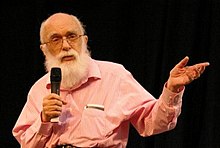
Self-described skeptic James Randi
In his 1992 paper, 'CSICOP and the Skeptics: An Overview', writer/researcher George P. Hansen observed that facets of the organized skeptical movement opted to employ an extended public relations campaign rather than conduct research. "These activities display more parallels with political campaigns than with scientific endeavors," Hansen wrote. His paper frequently came to mind while reading Project Core and considering how the project embodied what professional research conducted by competent and qualified individuals actually looks like and is capable of producing.

Stubborn debunkers typically attempt to minimize reported experiences of high strangeness or conspiratorial implications by employing any number of explanations that might indeed be applicable in some circumstances, but do not necessarily apply to a case at hand. While the burden of proof indeed falls upon one asserting a claim, the fact of the matter is that a more discerning group of experiencers and researchers do not assert claims, but simply question. The bottom line - again - is that people of higher intelligence and emotional availability don't want other people trying to tell them what happened to them who have no idea and don't even know they don't. Same as with the unquestioning believers. Whether one's field of interest includes psychic phenomena, entities, the intelligence community or most anything else, they should prefer to allow facts lead them to conclusions, not lobbying techniques.

Professional Research

So to tie this together, the UFO community consists of demographics with virtually polar opposite beliefs but each detrimentally effecting the paranormal genre in similar manners: They try to lead others to believe they are able to explain things to them of which they actually have little idea, are frequently unfamiliar with relevant material and are often not even qualified to venture an intelligent guess. People therefore become very reluctant to share their ideas and experiences for various different reasons, not just the well known fear of ridicule invoked by stubborn debunkers, but also because they don't want unquestioning believers saddling their reputations with wild and disturbing rumors based upon little more than questionable interpretations of reality.

And that is what's different about Project Core. I could tell you a lot of things it's not, but here's what it is: An objective and professional assessment of experiences reported by over 200 individuals, as well as assessments of answers provided to a series of specific questions. The only stipulations for reporting experiences were to provide sincere accounts, no matter how bizarre the perceived events, and to not submit any information obtained via hypnosis.

Researchers demonstrated a full awareness that surveys obtained did not necessarily contain accurate information, but might at times be more representative of what respondents interpreted, such as in the cases of reported physiological circumstances and perceived experiences. Data was professionally organized and presented, with much careful consideration given to patterns and correlations that seemed to emerge.

About a third of those surveyed indicated multiple witnesses were present during the events. Taking into consideration that many respondents reported multiple experiences, researchers suggested that future events might be accurately anticipated. A number of additional avenues for future research were also identified, including the implementation of cost effective technological advances. 

It was also apparent that researchers of alleged alien abduction have largely failed to explore the cases of witnesses who have unaided conscious recall of events. Pursuing such witnesses, while ceasing to rely upon regressive hypnosis as an investigative tool, was strongly suggested.

Research or brain scrambling?
Yet another emerging point was that respondents largely felt their experiences have not been portrayed accurately in media. Researchers considered that assertion might be due to the more bizarre aspects of the reports being frequently omitted by those portraying the experiences to the public. Readers were additionally free to surmise that ill advised use of regressive hypnosis, and leading of witnesses by biased hypnotists and investigators, likely play major roles in such inaccurate media portrayal. While reading Project Core reports, it seemed entirely possible to me that the common abduction narrative is, in reality, a rather small percentage of reported experiences, if not largely inaccurate and unreported. At the least, it appeared reasonable to question if the stereotypical alien abduction narrative is a very poor representation of what people perceive themselves to be experiencing.

I recommend reading the material posted at Project Core. There are several intriguing points and interesting insights.

But mostly I recommend it because it serves as a model of what professional research of reported paranormal experiences looks like. Pro research is pro research. Everything else is not.