Showing posts with label UFOs. Show all posts

Friday, May 13, 2022

UFO Activism and Congressional Hearings, 1960s Style

    Below is an excerpt from Chapter 10 of WAYWARD SONS: NICAP and the IC. The excerpt explores the efforts of Maj. Donald Keyhoe and his National Investigations Committee on Aerial Phenomena to generate Congressional hearings on UFOs during the 1960s. There are many similarities to events happening in today's overlap of politics and UFO advocacy. While Keyhoe's efforts may have initially appeared successful, his lobbying may arguably serve as more of a cautionary tale than cause for celebration. 


    NICAP files contain reference to what the organization considered “educational work” conducted in 1962. During the first quarter of the year, “special material” was sent to 62 students and teachers for what was described as use in preparing term papers, science projects, research reports, and so on (NICAP_Educational_work.pdf, p1). Such material included “a bibliography, source material, back magazines, etc.” More shipments for the fall were reportedly being processed. 

Similar efforts to “educate” Congress were also undertaken, as indicated in a 1962 form letter apparently authored by Keyhoe (NICAP_Educational_work.pdf, p9)

We can observe Keyhoe's tactic of declaring UFOs represented a national security threat. This would hold obvious significance to elected officials and intelligence agencies. Perhaps, however, applying the term “UFO” to such potential threats was not as relevant as UFO proponents might prefer the public believe. Beyond groups like NICAP using the issue as a public relations ploy, it's not clear how the armed forces should do its job any differently if it called air incursions UFOs instead of radar returns. Similar circumstances may be observed today. 

Keyhoe previously ran into resistance on such matters. Rep. Joseph Karth, in a 1961 letter to Keyhoe, addressed Keyhoe's proposal for a Congressional hearing. Karth wrote (NICAP_Keyhoe_Karth.pdf, p3): 
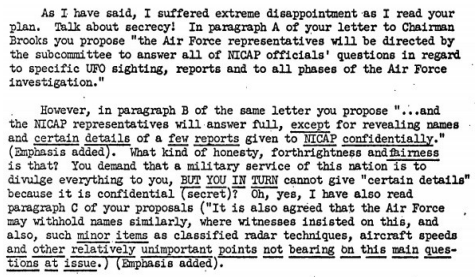

Rep. Karth expressed disappointment in Keyhoe's apparent intention to focus on Air Force secrecy as compared to presenting substantial evidence of UFOs. It has since become an all too standard part of the ufologist tool kit to plead their cases based on the obstruction of evidence rather than its presentation. 

Furthermore, Karth suggested he questioned Keyhoe's arrogance and hypocrisy concerning national security and secrecy. The Congressman appeared perturbed Keyhoe seemed oblivious to the sensitivity of classified material, referring to it as “minor items,” while expecting to be granted the luxury of withholding information as he saw fit. This of course became a staple of the UFO genre, and it continues today. Such concealed details frequently obstruct fundamental aspects of the universally recognized fact-finding process. The double standards try the patience of the more discerning members of the community at large. Rep. Karth was apparently in the “put up or shut up” camp, and saw the irony in Keyhoe reserving the right to remain silent while demanding answers from men charged with protecting national security. 
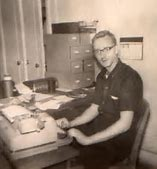
Richard Hall
Nonetheless, as noted in the above 1962 letter penned by Keyhoe, The UFO Evidence was on its way. It was destined to be considered among NICAP and editor Richard Hall's most significant contributions to the study of UFOs. From a July 1, 1964 NICAP press release (NICAP_papers_mixed_years.pdf, pp32-33): 

    “A documentary report charging Air Force censorship of unidentified flying objects was submitted today to Congressman John McCormack, Speaker of the House, and Senator Mike Mansfield, Majority Leader. The report is based on a 7-year investigation by military and technical experts of the National Investigations Committee on Aerial Phenomena (NICAP). 

“The 184-page document, titled 'The UFO Evidence,' contains hundreds of verified UFO sightings by airline and military pilots, aerospace scientists and engineers, and other experienced observers. 

“NICAP, a private fact-finding organization, includes on its Board of Governors and Advisers: Army, Navy and Air Force officers, scientists, veteran pilots, and other specialists... 

“The charge of official secrecy was backed by a majority of the Board and Advisers, including Colonel J. Bryan III, USAFR (Ret); Admiral H. B. Knowles, USN (Ret); Dr. Leslie K. Kaeburn, biophysicist, University of Southern California; and Dr. C. P. Olivier, President of the American Meteor Society... 

“The NICAP Report covers approximately 750 cases selected from over 5000 on file. The documented cases include numerous reports by Air Force pilots, and incidents of UFOs which made close approaches to aircraft... According to NICAP, the large majority of these cases are totally unsolved. Although Air Force analysts claim to have explained some of the cases, NICAP says counter-to-fact answers have often been given to Members of Congress and the press... 

“After the current outbreak of UFO sightings, the Air Force admitted it had 910 unsolved cases out of 8128 - approximately 11%. Heretofore the Air Force had insisted it had solved all but 1 or 2%. The most recent unexplained sighting, according to the Air Force, is the April 24 observation by a police officer in Socorro, N.M., who saw an egg-shaped UFO take off from a gulley. Imprints and scorch marks were found at the site. 

“The NICAP report states '...it is a reasonable hypothesis that the unexplained UFOs are real physical objects... artificial... under the control (piloted or remote) of living beings'... Many of the NICAP Board Members and Advisers have gone further, contending that the UFOs are extraterrestrial devices observing the earth. Among these are Col. J. Bryan III; Admiral H. B. Knowles; Prof. C. A. Maney; Dr. Leslie K. Kaeburn; and Capt. William B. Nash. 

“Verified cases in the report show speeds and maneuvers beyond the capabilities of any earth-made machines, often confirmed by radar... In addition to the massive U.S. evidence, NICAP reports dozens of foreign cases from trained observers which confirm the observations of high performance objects and lead to the same conclusion. 

“In order to reduce the dangers of accidental war caused by misidentification of UFOs on radar screens, and to educate the public to the realities, NICAP advocates a sweeping review of government policies on the subject by Congress. Speaker McCormack and Senator Mansfield have been asked to request UFO hearings. Many Members of Congress in recent years have gone on record in favor of open hearings... 

“In releasing the document, NICAP warned that crackpot groups might try to take advantage of it by claiming it supports their views. The Committee disowned any claims that UFOs proved any particular religious or philosophical views currently being expounded by UFO cults. NICAP stated it had not found verification of a single claim of communication with space men.” 

    NICAP would indeed eventually see its hopes come to fruition for a Congressional hearing on UFOs, but before that happened, CIA officers paid a visit to NICAP headquarters. A now publicly available CIA memo dated January 25, 1965, reflects Agency interest in obtaining materials, including UFO reports, from NICAP for delivery to its Office of Scientific Intelligence (OSI). The memo further states OSI desired the information to assist in preparing a paper on UFOs. 

The CIA Contact Division met with Richard Hall on January 19, 1965, at which time he loaned the dispatched officers material and UFO reports for review. It was noted in the January 25 CIA document there was a strong feeling on the part of NICAP officials that the Air Force tended to downgrade the importance of UFO sightings. Hall apparently told the CIA officers there had been instances where the Air Force attempted to intimidate witnesses and get them to sign false statements. 

In closing, the report stated a security clearance was being requested on Hall. There are various accounts and anecdotes around the UFO community about Hall's interactions with intelligence agencies, often framed as Hall having a rather nonchalant attitude about them. A generally accepted consensus is Hall was never issued a security clearance and did not develop a significant relationship with the CIA, and I have not discovered any particular reasons to suppose otherwise. 

A now declassified OSI memo is dated January 26, 1965. You will note it was apparently composed the day after the above memo was written. The OSI memo was sent to the Director of Central Intelligence from OSI Assistant Director Donald F. Chamberlain. It was written in response to a request from DCI John McCone for an assessment on UFOs. The materials borrowed from NICAP contributed to findings reported by Chamberlain in the memo, according to the CIA

Chamberlain summarized some then-recent UFO reports, adding no evidence was revealed UFOs were of foreign origin or were a security threat to the United States. He clarified OSI monitored UFO reports, including those investigated by the Air Force, and concurred with Air Force conclusions. 

Ironically, while Keyhoe and his supporters were convinced an orchestrated UFO cover-up was being perpetrated by the CIA and Air Force, the two agencies were apparently actually in agreement there was not even a threat, at least not from unknown airborne objects. Threats of propaganda and espionage were another story, as suggested previously by the Robertson Panel. An argument could be made such concerns, and the resulting minimization of the topic for what may have been considered in at least some instances the public's own good, contributed significantly to the perception of official UFO secrecy. 

Similar might be said about the intelligence community's aversion to publicly addressing UFOs due to reasons that included its own manipulation of the topic in an offensive capacity. Uncle Sam obviously did not want to address his own covert use of the UFO subject. 

There was additional irony in the way UFO enthusiasts tended to interpret CIA interest in NICAP. For instance, NICAP and Keyhoe chose to withhold certain information because they did not want to divulge sources of reports and documents. They subsequently feared the CIA was snooping around to infiltrate their lines of communication. That may have been true to some extent, but not for the reasons NICAP chose to believe, which hinged upon the perception the CIA was scrambling to keep the existence of an extraterrestrial presence from becoming publicly revealed. 

In a manner of speaking, NICAP activities and subsequent CIA responses served as a self-fulfilling prophecy for NICAP. Intelligence community actions often seemed to be interpreted to confirm what UFO investigators chose to subjectively believe, and that largely continues to be the case in the UFO genre today. 

                    *                                        *                                        *
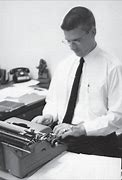
Gordon Lore
    Gordon Lore explained it was during this point in time he began working at NICAP. In his book Flying Saucers from Beyond the Earth, Lore stated he had taken a job as a writer-editor in Washington, D.C. In addition to writing, the future NICAP assistant director was also a musician who played the guitar at night at a local coffee house. 

Richard Hall was in attendance during one of Lore's performances in the summer of 1965, Lore wrote. He accompanied Hall and a group of friends back to Hall's apartment where they hung out and Lore entertained some more. Lore told Hall about his interest in UFOs, and was hired to join NICAP by the end of the night. He soon submitted his resignation at what he described as a subsidiary of U.S. News and World Report and was on his way to work with Keyhoe, Hall and NICAP.

“It was to become a dream job,” Lore wrote, “mixed with more than a little anxiety about keeping the organization afloat during the next five years.” 

In 1966 a series of dramatic UFO sightings began in Michigan. The widely reported events included dozens of witnesses, as well as police officers giving chase to whatever they were seeing in the sky. Renowned UFO investigator J. Allen Hynek infamously suggested swamp gas as a feasible explanation. 

Then-House Minority Leader and future-President Gerald Ford took interest. As an elected official of Michigan, he was among those supporting calls for a Congressional hearing on UFOs. The House Armed Services Committee soon conducted just such a hearing, although it was relatively brief. While there wasn't much in the way of substantial information getting revealed, a chain of events was by that point in motion that would forever shape the timeline of UFO World. 

The Air Force announced a forthcoming independent review of Project Blue Book and related UFO evidence. It was titled the University of Colorado Scientific Study of UFOs, conducted by what was known as the Condon Committee due to the lead researcher, physicist Dr. Edward U. Condon. 

Richard Hall described events of 1966 and how they influenced NICAP in his previously referenced 1994 paper, The Quest For The Truth About UFOs: A Personal Perspective On The Role Of NICAP. With a little help from the UFOs, Hall explained, NICAP was thrust further than ever into the media spotlight. As a result of all the buzz, NICAP was deluged with mail, routinely receiving hundreds of letters a day. Public interest in UFOs, and subsequently NICAP, produced a degree of financial stability previously unknown to the organization. 

Don Berliner reported that by early 1967 NICAP grew to some 14,000 members. The Committee then employed nine full-time staff, which, Berliner noted, was more than could be said for the Blue Book payroll. 

Hall wrote that NICAP worked diligently to provide Dr. Condon and his staff with the best evidence possible to assist in compiling its report. NICAP understandably saw the UFO study undertaken at the University of Colorado as significant, or, as Hall put it, that their dreams were coming true. The help was enrolled of Dr. James E. McDonald, an outspoken UFO proponent and atmospheric physicist at the University of Arizona. Many UFO proponents probably fully anticipated a desirable outcome, at least initially, because they sincerely believed the evidence did indicate an abundance of interplanetary craft. Intelligence agencies and other scientists, not so much. 

In his 1973 book, Aliens From Space, Maj. Keyhoe stated NICAP eventually compiled some 9,300 UFO cases, 2,000 of which he suggested were top notch. I guess he was suggesting there were aliens all over the place. Perhaps it did not occur to Keyhoe that overwhelming Condon and the public in endless stories might not be as effective a tactic as he hoped. 

Hall wrote NICAP “worked on a massive project of copying files for the Colorado scientists.” This went on for over the course of a year and included “hundreds of strong cases,” as well as NICAP subcommittees sending Condon new reports perceived as potentially important. 

Keyhoe further wrote that almost right away Condon and the project administrator, Robert J. Low, began indicating to the press they did not anticipate arriving at conclusions supporting anything overly significant about UFOs. The two were quoted as speaking favorably about Air Force investigative efforts, as well as suggesting the government should get out of the UFO business. Such positions were of course in conflict with stances held by NICAP. 

In spite of the statements, Keyhoe and NICAP tried to stay the course. That might have particularly been due to repeated assurances received from Condon and Low the study would be conducted objectively, according to the writings of Keyhoe and Lore. Dr. Condon and Robert Low reportedly minimized the significance of their published remarks when asked about them by Keyhoe. 

The final straw came for Keyhoe when he learned of what came to be known as the “Trick Memo.” It was a leaked Condon Committee memo written by Robert Low in which he described an operating strategy for the UFO study. The committee would consist of scientists, Low explained, who could not possibly prove a negative result, even though they might indeed publish an impressive body of evidence suggesting there was nothing extraordinary about UFO observations. Low then added, “The trick would be... to describe the project so that, to the public, it would appear a totally objective study, but, to the scientific community, would present the image of nonbelievers trying their best to be objective but having an almost zero expectation of finding a saucer...” (Lore, Gordon. 2018. Flying Saucers from Beyond the Earth. BearManor Media. (p124))

Keyhoe and his organization, when they got wind of the memo, responded with an April 30, 1968 press release, “NICAP Calls Colorado UFO Project Failure” (NICAP_incorporation_papers.pdf, p31). The release stated NICAP sent a report to the president of the United States, containing evidence of “grave deficiencies” in the University of Colorado UFO project. It was further stated NICAP broke relations with the project after 17 months of cooperation. Reasons listed for the break included Condon had never conducted a field investigation of a UFO sighting or interviewed responsible witnesses, although named as chief principal investigator. 

“Dr. Condon summarily discharged two Project scientists,” the news release continued, “for revealing written proposals by Project Coordinator Robert J. Low that the Colorado Project be represented to the public as 'totally objective', when in fact it would be constituted almost entirely of non-believers, with 'an almost zero expectation of finding a saucer'.” 

It was further alleged Condon and Low “both refused, in writing, to answer NICAP questions as to whether the Project was being conducted in a biased and negative manner.” Condon, it was asserted, “refused to guarantee he would examine any of the hundreds of NICAP-investigated UFO reports, submitted at the Project's request.” 

Keyhoe and NICAP took measures to prepare for public response to what was clearly going to be, from their perspectives, an unfavorable report from Condon. Their efforts included a second Congressional hearing, organized by NICAP supporter Rep. J. Edward Roush, an Indiana Congressman who chaired the House Committee on Science and Aeronautics. He held the Symposium on Unidentified Flying Objects on July 29, 1968. 

While a few qualified scientists and NICAP representatives attended and provided testimony, the event was limited in scope. It did, however, mark the historic occasion of a second Congressional hearing on UFOs. 

                    *                                        *                                        *

    The Condon Report was published in January 1969. The general conclusion stated nothing had come from the study of UFOs that added to scientific knowledge. It was additionally reported, “Careful consideration of the record as it is available to us leads us to conclude that further extensive study of UFOs probably cannot be justified in the expectation that science will be advanced thereby.” 

The issue was addressed in the document as to what, if anything, the federal government should do about UFO reports received from the general public. “We are inclined to think that nothing should be done with them in the expectation that they are going to contribute to the advance of science,” the Condon Committee wrote. 

If the implications were not clear enough as to what the group collectively recommended about operating government UFO research projects outside normal military channels, it explicitly clarified its stance. “It is our impression that the defense function could be performed within the framework established for intelligence and surveillance operations without the continuance of a special unit such as Project Blue Book, but this is a question for defense specialists rather than research scientists.” 

The Condon Committee made its position clear: The study of UFOs was producing nothing of scientific value and Blue Book should be discontinued. 

                    *                                        *                                        *

    The report, eagerly anticipated by the public, was now actually published. Gordon Lore wrote a memo to the NICAP office in the aftermath. The January 27, 1969, memo declared the organization and the UFO subject were facing perhaps their most critical period. Refuting the Condon Report was crucial and would require cooperation and hard work on the part of NICAP, Lore suggested (NICAP_Condon_reaction.pdf, p1). Time would show the goal was not to be achieved. 

Challenges included quarrels among the staff and a declining membership. If the negative Condon Report wasn't bad enough, it had now been over two full years since the Michigan sightings. People were tired of waiting for answers, or at least the answers they wanted to hear. What's more, a growing number of NICAP supporters' patience was wearing thin about attacking the Air Force. 

As explored earlier, it is difficult to tackle the UFO subject without drawing lines in the political sand. This was not only true in Keyhoe's day, but was the case for years to come. As I write this, current news cycles are more likely to include statements about UFOs from Pentagon spokespersons, Senators, and bureaucrats than from scientists. We should take that into deep consideration when forming our assessments. We might also question what practical contribution Congress might even make to the topic of UFOs. In hindsight, much of it seemed to be performative and in pursuit of a mixed bag of agendas. 
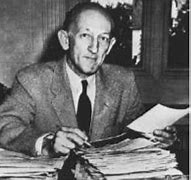
Maj. Donald Keyhoe
In the case of Keyhoe, he seemed to have come to believe lobbying elected officials and leveling demands at intelligence agencies was UFO research. At the least, it appears he considered it the most likely way to produce substantial results. If his actions were indicative of his beliefs, and he truly thought he was pursuing the most productive path, he was simply wrong. He gave it a hell of a try, though, for what that may or may not be worth. 

Many at the time seemed to believe the Condon Report was part of an orchestrated cover-up to deny the reality of UFOs and ultimately the extraterrestrial presence the reported craft were often believed to indicate. More than a few still think so, at least among those in UFO circles who are aware of the Condon Committee. Frankly, I doubt many people could tell you why they believe the study was a sham, the idea just took on the quality of one of those “everybody knows” kind of things. 

I strongly suspect very few people could articulate such circumstances as the Trick Memo and offer specific reasons why they believe the Air Force and Condon Committee conspired to deceive the public and cancel Project Blue Book. In most circumstances, the primary reason for such beliefs seems to be because UFOs were not confirmed to be sensational, thus there must have been a government cover-up. 

Perhaps there actually were more deceptive motives at play. It's possible, for any number of reasons. It's also possible the Air Force came to conclude chasing UFOs was a waste of time much more often than not, and Condon and Low were subsequently identified as good candidates to arrive at such a conclusion. 

It's a reasonable likelihood Air Force officials sincerely found UFOs and the related controversies to be an unproductive drain of resources, and believed objective scientists would concur – as had often been the case up to that point. The powers that be may therefore have identified a somewhat “fixed” study as the best way out of the problem. It may not have been they were trying to rig the study as much as they were trying to ensure it did not fall under the care of overly enthusiastic saucer fanatics. 

It could even have been the intent, at least in part, for the Condon Committee to upstage NICAP, and create an alternative group of respected scientists and researchers. The alternative group would, of course, reach different conclusions than those promoted by NICAP. In the process, it would ease the Air Force burden of answering questions about UFOs and constantly finding itself in the crosshairs of Donald Keyhoe. 

                    *                                        *                                        *

    Richard Hall did not seem to subscribe to conspiracies about the Condon Committee. That was the case even though he was admittedly bitter over circumstances surrounding his August 1969 final departure from NICAP. He described negotiations as long and contentious with Board members Col. Joseph Bryan III and Joseph B. Hartranft, Jr. Hall wrote the conflict was over back salary issues and stated the negotiations ultimately went nowhere. 

Hall extensively supplied information to the Condon Committee, as well, which stood to substantially increase his disappointment about the resulting report and overall circumstances. Nonetheless, he did not promote the Condon cover-up angle. 

“Was the Colorado UFO Project a conspiracy to debunk the subject?” Hall wrote in 1994. “Another 'front' operation to sweep the UFO problem under the rug? Many UFOlogists today write it off in that way, assuming that it must have been a put-up job from the start. However, there is a much simpler and all too-human explanation for what happened.” 

Condon and Low were simply not interested in UFOs, Hall suggested. Hall wrote that during one briefing he attended, Condon fell asleep. 

In another instance, Hall explained he personally hand-carried to Condon what he felt was an impressive and thick investigation report on a 1966 UFO case. When the Condon Report was later released, Hall was astonished to find no mention of it at all. 

“It had never occurred to me,” Hall explained, “that he would simply ignore it.” 

In his previously referenced 2018 book, Gordon Lore reflected, “Following the public release of the Condon Report, the prospects for NICAP continuing as a viable UFO organization quickly took a downward spiral. Adding fuel to the fire, unfortunately, was Keyhoe himself. Being an organizational and money manager was not his cup of tea. Some had even compared him to 'a second Townsend Brown.' 

“In a secret meeting on December 3, 1969, the NICAP Board with Colonel Joseph Bryan III presiding, fired both Keyhoe and myself. It soon became apparent that I had to be terminated as a convenient 'scapegoat.'” (Lore, Gordon. 2018. Flying Saucers from Beyond the Earth. BearManor Media. (p237)) 

And like that, the Keyhoe years were over. 

Staffer Stuart Nixon became director, and John “Jack” Acuff was soon appointed president. Ted Bloecher recalled the circumstances in a letter written to Richard Hall in approximately 1973. He was initially referencing his own business disagreement with Nixon, as compared to those concerning Keyhoe and Lore, when he wrote, “I have underestimated the lengths Stuart is capable of going to. But then, he's the one who fixed it so Major Keyhoe and Gordon Lore got axed. The shame of it is, I went along with it.” (NICAP_Bloecher_Report_1947.pdf, p5)

Saturday, February 26, 2022

Copernicus Did Not Cite Esotericism

    There is an argument that "the phenomenon" is ambiguous and fleeting. The elusive apparitions act with intent and even a sense of humor, or so say many of those who believe they have met the UFOs, Bigfoot, and similar oddities up close and personal.

My friend tells me if there are such goings ons, the instigator simply refuses to be corralled. They say it's like a soap bubble drifting on the breeze, colorful and attracting our interest, yet disintegrating under the very grasp which tries to contain it. 

The sights and events often interpreted to be related to UFOs and similar reported phenomena, some suggest, must surely all be from the same mold. This would account for its elusive nature and an overwhelming lack of confirmed physical evidence, even as cost effective technologies have advanced which would make the collection of hitherto absent evidence all the more feasible.   

Such theories of an intelligence behind an overarching and elusive "phenomenon" teeter on the edge of subjectively assigning definitive characteristics to apparitions not yet shown to so much as exist, at least not "exist" in more commonly accepted definitions of the word. Some would argue therein lies the rub, and perhaps they are correct. Maybe further knowledge of UFOs and things that go bump in the night indeed lies in the realms of the esoteric and traditions passed down among indigenous populations. 

If that is the case, however, they must also take responsibility for understanding they cannot expect those who prioritize evidence-based research to embrace their assertions on faith alone. They must effectively demonstrate a specific difference between their chosen endeavors and searching the snow on the television screen for patterns of intelligence. If there is a difference, it should be demonstrable.

If knowledge of the "phenomenon," "other," "visitors," or whatever labels one chooses to project upon it, is more likely found in monasteries than science labs, the scientist trying to simultaneously sell both ideas to the public - and funders - must come to terms with the dilemma. At the least, it is unreasonable to take the role of a persecuted Copernicus, suggesting those who argue alternative views will not accept your evidence, when your argument advantageously relies upon the notion your white whale leaves no evidence when convenient. It can't be both.

Wednesday, January 5, 2022

The Wider UFO Picture

     Sometimes it can be difficult to stay aware of the forest as we closely examine the trees. Details matter, of course they do, but what is the "takeaway" from some of our deep dives into UFO World?

The late Frank Wisner, who ran the
Office of Policy Coordination before
becoming Deputy Director of Plans
In Wayward Sons, I take extensive looks at some of the organizations involved in mid 20th century UFO shenanigans. They included NICAP, the FBI, the CIA, and some specific aspects of the Agency are explored, such as the Office of Policy Coordination and the Directorate of Plans. The actions of specific individuals are also examined, as compared to just suggesting the ever present "they" were up to something, because details matter. Indeed they do.

That stated, a more overarching plotline might be considered as well. The intelligence community, along with a media consisting of "journalists" who are uninterested in accuracy for a variety of reasons, acted in ways that cultivated unsubstantiated UFO-related beliefs. That is the case regardless of what legitimately interesting and unexplained phenomena might lie at the heart of an extremely small percentage of UFO cases.

UFO researchers, and the orgs they founded and represented, subsequently parroted and embellished the unsubstantiated tales of interplanetary visitors. While there are many different reasons for the credulous actions of UFO investigators, the fact will remain the cumulative effect was a poorly informed public. 

In spite of all the sensationalism, hundreds of conferences, thousands of books, and countless hours of podcasts and online presentations, there is very little established as fact about UFOs. As one contact once put it, "Everything we know about UFOs would fit on a postcard." Unfortunately, many poorly informed people think they know a whole, whole lot.

Researchers such as Greg Bishop, Mark Pilkington, and Adam Gorightly, to their credit, extensively explored the story of Paul Bennewitz. The saga orbited around the actions of such figures as Richard Doty, William Moore, Leonard Stringfield, and Myrna Hansen.

Greg Bishop's Project Beta:
The Story of Paul Bennewitz,
National Security, and the
Creation of a Modern UFO Myth
As the referenced researchers demonstrated, there is virtually nothing in the saga that can be accepted as true. The entire account of aliens kidnapping people, abusing cattle, and inhabiting an underground base in Dulce grew out of regressive hypnosis sessions and fabricated stories released upon an eagerly receptive UFO community. In their individual works, Bishop, Pilkington, and Gorightly tracked this down because details matter. 

What they also teach us, in addition to the details, is the saga contributed to the public becoming grossly misinformed about supposed UFO phenomena. Extremely important point: Many of the talking points first introduced during the Bennewitz Affair continue to be widely accepted today as truthful, as well as embellished upon, as if they were steps in a legitimate unfolding research process. Many people who subscribe to the beliefs simply could not tell you where the Dulce base legend, for instance, actually came from; they just unquestioningly accept "everybody" knows it.

James Carrion took deep dives into the UFO events of 1946-1947. His resulting research included extensive examination of official government documents, establishing such circumstances as the press being misinformed of R&D on a supposedly airborne weapon comparable to the atomic bomb. The referenced operation, Project Seal, was actually related to underwater explosives and had been discontinued before military officers promoted it as the latest and greatest flying weapon.

Similarly, Carrion documented how an intelligence analyst reported his assessment the "Ghost Rockets" story was a deception. The analyst, a Robert A. Winston, explained why he suspected the Swedes were aware of the origin of any such rockets. Winston further explained his reasons for concluding Swedish officers weren't worried about the rockets. Incidentally, Winston became a CIA officer and his story overlapped into my research of the 1960's scene surrounding NICAP as well.

Details matter, and we should indeed follow such lines of research as far as possible. A panoramic view of such circumstances, however, further reveals meddling in things UFO. 

I contend that the wider story from one instance and well-researched saga to the next is that the circumstances exist at all. We have clear and documented evidence the UFO topic has been manipulated since the outset of the modern phenomenon, 1940's to present. That's the case completely independent of the motives and intentions of the players, and it subsequently impacts the public, their beliefs, and their abilities to think critically. While it matters who the involved parties were and what they did, a relevant point that should not be overlooked is the very basis for much of the popular beliefs is grounded in demonstrably unreliable information. 

It's been that way from the outset. We would be wise to act accordingly.  

Wednesday, May 19, 2021

UFOs? It's Complicated

    Developing understandings about reported UFO phenomena requires more effort than clicking on a few links or watching the occasional news show that looks suspiciously like entertainment. It's not necessary that everyone gain such understandings, but it should be considered a minimal requirement for those who wish to have much more to say about UFO reports than they don't know their explanations. While the following circumstances certainly do not account for all cases, it should be more than apparent why a sincere and meaningful discussion should include consideration of such material.

Project Palladium was a mid 20th century multi-decade CIA operation that began by dropping aluminum strips from airplanes to confuse enemy radar. By the 1960's it evolved to include the ability to project "ghost aircraft" onto enemy radar with the appearance of any size, altitude, and flight pattern desired. According to CIA man Gene Poteat, every Palladium mission included a CIA team with its ghost aircraft system, an NSA team with communications intelligence and decryption equipment, and a military operational support team.

The teams were apparently subject to releasing "a timed series of balloon-borne metalized spheres of different sizes." The spheres were launched into the path of the ghost aircraft. In an example given by Poteat of an operation off the coast of Cuba, an American fighter plane was made to appear incoming from Key West. Cuban fighter planes were scrambled to intercept the perceived aircraft. On cue, a Navy submarine surfaced just long enough to release the balloons. The idea was for the ghost aircraft to alert Cuban defense systems, then Palladium personnel could eavesdrop on resulting communications in order to discern the sensitivity of the Soviet-made radar. This was done by discovering the smallest balloons detected. Suffice it to say plenty of confusion ensued for the Cubans as Poteat and his crew obtained the information they were after.  

In the event you're wondering what Poteat's team ultimately did with the ghost aircraft during the mission, they made it vanish. He reported they had no trouble keeping the phantom plane out of reach of those in pursuit. When a time came they were finished with the exercise and a Cuban pilot was preparing to fire on the target, they simply turned off the Palladium system and voila, a disappearing aircraft, gone without a trace.  


USS Nimitz

In its ongoing coverage of what has come to be known as the more current UAP situation, The War Zone reported on the evolution of such technology and the military applications. Enter NEMESIS, the Netted Emulation of Multi-Element Signature against Integrated Sensors. 

"When it comes to the U.S. Navy," Tyler Rogoway wrote, "it is using swarms of lower-end networked drones, submarines, ships, unmanned underwater vehicles, and more, to convince the enemy to think they are seeing ghost fleets and aerial armadas that aren't really there." 

Rogoway reports NEMESIS represents a quantum leap in electronic warfare. "Yet none of its components are all that exquisite," he continues, "it's just the networking of them together and being able to combine their effects cooperatively with highly agile computing and software that is. Swarming drones working together to decoy, jam, and distract the enemy? That is not a high-end capability. Unifying those effects with ships, other aircraft, submarines, and more in real-time to make multiple enemy sensors in disparate locations see the same thing? That is revolutionary."

It is also not necessarily a monopoly. Rogoway goes on to suggest adversaries may be applying similar technology during interactions with U.S. warships and military aircraft.   

He further suggests reported balloon-like objects and menacing drones may be designed to obtain valuable signals intelligence with low risk to reward returns. It is noted the locations of such reported incursions include the nation's most active military training corridors, what Rogoway refers to as "the most advanced air defense sensor and networking technology on planet earth all operating in one region." Targeting the areas seems a given, the means may be the primary issue. 

This might account for why, as many ask, American forces do not simply fire upon or confiscate such reported intrusive drones and UAP. Electronic silence might be more advisable if the stalkers are swallowing up information; the devices may be relatively inexpensive and expendable, are subject to have replacements come back anyway, and the less data collected about responses and communications, the better. Cuban forces would have been better strategically served to ignore Poteat's crew than allow him to record their resulting activities and the capabilities of their Soviet radar systems. 

Tim Binnall and I discussed the implications on a recent episode of Binnall of America. No matter how well any pilot may know their aircraft, they are at a decided disadvantage when interpreting any given encounter if they lack a thorough understanding of a project such as NEMESIS and how their instrumentation might respond to such targeted deception. Moreover, omitting such circumstances from discussion could be considered disingenuous while proclamations are made that reported craft cannot be manmade. We might similarly consider reported balloon-like objects may have more functions than readily apparent to many of us, as well as the fact occurrences described as happening nearly every day for two years could not very well be thought of as, by definition, extraordinary. 


Google Loon Balloon

Writer and researcher Adam Kehoe takes a look at what can be established about American-engineered high-tech balloons known to be aloft off the coasts of the U.S. in his recent submission to The War Zone. The balloons can be steered, remain in flight for long periods of time, and carry cutting-edge payloads. Some, Kehoe reports, can cruise as high as 92,000 feet. Certain types may stay in the air as long as 30 days.

For several years we were expecting UFO reports to go sideways as the diversity of airborne objects increased. That time is well upon us. There is a large variety of exotic devices and classified aircraft populating our skies. Adding to the complexity are cutting-edge technologies designed to limit and confuse abilities to monitor and accurately interpret those objects.

It's not necessary to gain a deep understanding of the subject matter to be interested in UFO reports. It is necessary, however, to include the material in the discussions if any further assertions are made than an explanation is not readily available.

Tuesday, April 13, 2021

Corbell Asserts but Fails to Report How Stories Vetted

    Among the latest stories to splash the UFO Disclosure pot is one involving Jeremy Corbell and material he calls "genuine UFO/UAP footage." Corbell published a post at his website and took to Twitter to share images and a film clip of what he described as pyramid shaped craft and transmedium vehicles.


The maker of such films as Bob Lazar and Hunt for the Skinwalker wrote at his website he obtained the material "in an anonymous data dump." Each item included "detailed written context," he added. 

Corbell wrote he enrolled the help of George Knapp to verify the materials. As a result, he asserted, "I can confirm their authenticity - as well as - the narrative supplied to me when they were presented."

Substantial detail is put forth about the alleged context of the images and video footage, described by Corbell as coming from a May 1, 2020, Office of Naval Intelligence classified briefing. No further information about the vetting process is offered, however, than Corbell's reference to information "articulated" to him by "those familiar with the briefing." The names or specific roles of such people are not provided. Corbell similarly goes on without justification to assert the "impressive provenance" of the material while explaining with confident certainty its otherwise quite unclear purposes. 

Corbell did not immediately respond to an email request to field a few questions for inclusion in this blog post. 


Pentagon spokeswoman Susan Gough confirmed the photos and videos were taken by the Navy, adding the UAP Task Force included the incidents in their ongoing examinations. Gough would not provide further context, however.

"As we have said before," she continued, "to maintain operations security and to avoid disclosing information that may be useful to potential adversaries, DOD does not discuss publicly the details of either the observations or the examinations of reported incursions into our training ranges or designated airspace, including those incursions initially designated as UAP."

Information has been scarce about the UAP Task Force, with its scope and significance called into question. The personnel have yet to be publicly identified, and George Knapp reportedly suggested the "Force" had no budget and no staff. Any resulting report, it was added, would have to be produced by the director in his spare time because he already had a full time job.

Questions were raised about how material from a classified briefing could be provided to Corbell. Similar questions arose about the apparent discussion of the contents of the briefing as portrayed at his website.

"Without having seen the actual material that you are referring to, I would say a couple of things," Steven Aftergood, veteran researcher of national security and classification policy at the Federation of American Scientists, explained in an April 12 email. 

"It is entirely possible for a classified briefing to include unclassified parts. In fact, most classified documents do have at least some unclassified paragraphs or portions.

"In the UFO context, the question of authenticity is much more important than the question of classification. There is a history of fabricated documents and images that purport to show UFOs. If someone cannot reliably identify the source of their information because it is 'classified,' then that would count against its credibility."

The UFO faithful are indeed going to continue to struggle to gain respect from a wider audience due to unresolved issues about the context of leaked material. It is reasonable to question if intelligence officials genuinely believe the objects depicted are as mysterious as Corbell's apparent sources would have us believe. It is also questionable as to how widely this view might be shared among such officials. There is no way to resolve such issues other than through transparent verification. 

The motives of the sources and those who relay their stories will remain a significant issue. Why do the sources prefer anonymity if the info they share is unclassified? One school of thought might suggest ambiguity offers more opportunity for unearned credibility than if the public conclusively knew three-plus years of Disclosure stories all originated from the same person or two.

It ultimately boils down to why intelligence officials, with a message they feel is of great substance, would choose Jeremy Corbell to carry it to the masses. After all, Mr. Aftergood was quite receptive to exploring the topic. Maybe Corbell should be questioning why those in Naval Intelligence circles placed such confidence in his info security and communication skills. If he's not asking why, perhaps we should be asking him why not.

Tuesday, February 9, 2021

Discerning Truth

    Misinformation needs no introduction. You've seen it around, and a lot of it piggybacks on fringe subject matter. Sensationalism is a staple of the UFO genre. It can be argued that has to be accepted as the case before meaningful discussion becomes possible.

I asked a few writers and podcasters familiar with UFOs and similar subject matter if they would share some thoughts on how we explore such topics without getting overwhelmed in false information. How do we know what's true and what's not? How do we keep an open mind without making ourselves vulnerable to lies, opportunists, and cult-like thinking?

Sarah Scoles is a science journalist and writer of many articles published at outlets such as WIRED Science and Popular Science. She is the author of the books Making Contact: Jill Tarter and the Search for Extraterrestrial Intelligence and They Are Already Here: UFO Culture and Why We See Saucers. Sarah replied in response to my request for a contribution for this blog post:

    A story is just a story. No matter how compelling someone’s sighting or experience, it is just that: theirs. Human minds and memories are fallible things, especially when they're encountering something outside their everyday experience, and regardless of their owners’ expertise or power. No one interprets or recalls sensory input objectively. So as meaningful as a story may be to a person, that significance does not itself constitute evidence that their interpretation is correct. 

Second, consider the source. What organization or individual made this information public? How do they stand to benefit from its dissemination? What might their motivations be? Who pays ’em? How might all of that affect their coverage? 

Third, dig into the attribution. Are sources anonymous, and do the authors give a justification for why, or describe the vetting that ensures these mystery people are legit? Many mainstream publications have public policies on the use of such sources (many independent sites do not—but you can always ask). Even if the source is legit, ask what their motivation is for talking. 

Next, look at how much the piece relies on the word of its sources (turns out, people can say pretty much anything they want!), versus harder, more verifiable evidence. For example “Aliens landed on the White House roof, according to a guy who says he saw it happen” versus “four people who described the same thing independently” versus “security footage and genetic analysis” versus “a declassified document.” 

Speaking of documents, do the authors/producers link to documents they cite? If not, why not? Are these primary sources? Whenever you can, get your own hands on primary sources. 

After all that, ask honestly if you’re falling prey to confirmation bias: the tendency to seek out and interpret evidence in favor of existing beliefs. Confirmation bias is a normal human flaw—we all exhibit it! But by being aware of the tendency, you can step back and get a more objective view. 

Finally, be willing to change your mind in the face of new evidence. If you’re interested in the out-there stuff, separating the wheat from the chaff—not just dressing the chaff up fancy to look like wheat—lets you focus on investigations more likely to lead to something real and interesting...even if it’s not what you set out searching for.

*                           *                         *

Carol Rainey is an award-winning filmmaker and writer of diverse topics and formats. Her works include the article The Priests of High Strangeness: Co-Creation of the "Alien Abduction Phenomenon". Carol wrote:    

    If you’re new to the field of ufology, welcome. You’re in for a tour of great mystery, intellectual challenge, and ultimate puzzlement. Sometimes answers to the UFO phenomenon’s biggest questions seem to be right around the corner, if you just push on and run hard with whatever evidence you’ve turned up. But the mystery won’t easily unveil itself to you or anyone else. The study of UFOs, which shares turf with all things paranormal, often presents in deceptive, elusive, and ambiguous terms.

That’s why people at all levels of experience can truly get lost in the material they encounter – whether at conferences, in phone calls with experts or celebrities, in talk with others intrigued by the field, and in the plentiful websites, blogs and books on the subject. During the 10 years I worked closely with one abduction researcher, shooting a film about his work, there were times when even my most rational self lost the ability to distinguish factual events from those that were fanciful or fabricated. What reality was I living in? That’s an extremely uncomfortable place to be in.

There are steps you can take, early on, in the interest of keeping yourself balanced and level-headed:

  • Bring along your own internal bullshit detector – and use it frequently. The UFO subject often tosses out speculation and hoaxes right from center field. Will you be able to spot them without falling into them?

  • Try the buddy system. Plan to go on your journey with someone whose perspective you respect, whose judgement you have reason to trust.

  • Begin learning about UFOs and sightings first, only later tackling abduction cases.

  • Arm yourself with some deep reading in the literature of the field. There’s a surprising amount of it, including books by pilots, NASA engineers, psychiatrists, and military top brass. Recommended:  Uninvited Guests: A Documented History of UFO Sightings by Richard Hall (1988), The Invisible College by Jacques Vallee (1975), The UFO Experience: A Scientific Inquiry by J. Allen Hynek (1972), an astronomer and consultant to the Air Force. Early researcher John Keel offers fascinating takes on the phenomenon, as do books by Jerome Clark and The Trickster and the Paranormalby George Hansen. Eventually, you’ll want to explore work in anthropology, sociology, folklore, and religion. Start with The Fairy Faith in Celtic Countries by W.Y. Evans-Wentz.

Aaron John Gulyas is a historian and the author of several books on paranormal and conspiracy culture. He also produces the podcast The Saucer Life. Aaron wrote:  

    After creating The Saucer Life for the last three years—and writing about flying saucer culture and other fringe topics for far longer—I've got several ideas about the best way to get started in studying these topics.

The most significant thing that has helped with the perennial problem of information (misinformation? disinformation?) overload is to go back to the beginning. No matter what the story or claim is (and no matter how authoritatively an author writes about it), you will be best served by finding as much of the original documentation supporting that story as possible. Only when you strip away the years, or even decades, of accumulated expert opinion and analysis can you get to the bones of an encounter or incident.

What does this look like in practice? The best example I have is John Keel and the Mothman complex of weirdness. While reading The Mothman Prophecies is an excellent thing to do, it doesn't necessarily provide the most thorough understanding. Go back and check newspaper articles (there were a bunch). 

Then, pair that with the documents available at johnkeel.com, which has an amazing array of Keel's correspondence and notes from the time, years before he crafted The Mothman Prophecies. Will this tell you what the Mothman was? No. But it gives you a fuller perspective. Start there—get a grasp of the sources. Then, when you do engage with the small mountain of Mothman books and documentaries, you'll have a sharper focus and a solid grounding in the facts.

So go back to the beginning. Obvious advice from a historian, but it's the best way.

Jeb J. Card is a writer, researcher, and podcaster. His projects include In Research of... Podcast and his book, Spooky Archaeology: Myth and the Science of the Past. Jeb explained:

    Some key aspects of understanding alternative worldviews or conspirituality:

First, understand the roots of these ideas. It is rare that an alternative concept has no ancestral roots. Many can be found largely recognizable in the later Victorian period (when many fields of science were beginning to professionalize). These notions in turn often have even older roots. To really understand claims about lost ancient knowledge and secret beings that provided it, one should look much deeper, through Theosophy, through the Renaissance fascination with hieroglyphs, through alchemy, back to the Classical fascination with Egypt as a source of knowledge. Seeing the same ideas emerge again and again puts a different perspective on them in the present, where the trappings of scientific inquiry are at times bolted onto much older concepts.


Second, listen to claims rather than trying to place them in your existing classificatory frames. You may think you know what a phenomenon is (UFOs are ET or UAVs, Bigfoot is a mystery hominin or mistaken identity, ghosts are souls or EM signatures or infrasound effects). Focusing on “is it this” or “is it real/not real” can overshadow organic aspects of claims and ideas. You may not like your Bigfoot to be with a UFO orb, or vice versa, but if that’s what a claimant says, then that’s what they say. A broader unobstructed view can put these notions into perspective, be it because you think they are part of some larger paranormal entity, or because they have similar social dynamics (strange knockings, non-human entities, objects flying through the air: Séance or Bigfoot hunt?). 

Finally, don’t argue, describe. Descriptions and discussions of ideas, whether or not you find them credible, will do more to further your understanding and those of others, than yelling simple slogans on Twitter or getting into shouting matches.

Sharon A. Hill is the author of the book Scientifical Americans: The Culture of Amateur Paranormal Researchers (McFarland, 2017). Sharon contributed:

    Paranormal and mysterious subjects are a tricky business. Forming thoughtful opinions about mysterious subjects takes considerably more commitment than searching the web and watching YouTube videos where about 75% of the content is shallow, promotional, and possibly made up. 

The purpose of making strange claims and telling spooky stories is primarily to evoke an emotional response. It’s a secondary reaction to wonder if they are true and accurate. Listeners usually absorb what they see and hear and don’t apply too much critical thinking. Rationality ruins the magic and can create social pitfalls as a consequence of uncovering (deliberate or inadvertent) lies and deception. Curtailing logical rigor is essential to the process of promoting the strange idea. The researcher who is after the best answers must push against this flow of dramatic, exaggerated, repeated, or manufactured details and be committed to recognizing the lure of the fantastical to avoid being sucked in. This takes a considerable amount of experience and background knowledge - about perception, psychology, and persuasion - that most people will not gain until pondering and examining for years the human aspects that affect valid observations.

There are two crucial keys to developing thorough understanding of a controversial subject, both of which are inherent in the methods of scientific research:

1. What is the foundation that exists already? Find out about the earliest ideas in books or media and from where those concepts were pulled. Gain familiarity with the roots of the subject that existed pre-Internet, when there was a worthier effort put into scholarship and publishing. If you have no insight into the core writings and history of the subject, time and effort will be wasted, you will be confused and misinformed, and ultimately, will not succeed in gaining meaningful findings.

2. Know the arguments from all sides. That means diligently examining the ideas against the popular notions of the subject. For example, the best documented cases will have skeptical commentary. These perspectives keep you tethered to reality, even if you don’t accept a specific argument as valid. These two practices will help you build a filter for discerning useful information from garbage and experts from pretenders.

James Carrion is a writer, researcher, and former International Director of the Mutual UFO Network. He has authored multiple articles, papers, and books, including his latest, The Roswell Deception. James contributed: 

UFOs and Magical Thinking

    If you are interested in the subject of UFOs but feel overwhelmed with the conflicting information you hear from the mainstream media, entertainment TV channels, UFO organizations, and the Internet, you are in good company. How is it possible to constructively learn more about this subject without going down a conspiracy rabbit hole from which you may never emerge? The answer in two words is "Critical Thinking" - the analysis of facts to form a judgment. But whose "facts" should you analyze as many of the public sources I just mentioned all tend to portray their UFO assertions as facts?

Well let's start with this fact. No human has ever presented public unequivocal evidence of a UFO artifact of extraterrestrial origin. Sure, many have claimed to have handled, tested, and warehoused such artifacts, but unlike human space debris that you can observe firsthand yourself at the Smithsonian Aerospace Museum, you cannot yet see or touch incontrovertible UFO physical evidence. 

But wait, how about the alleged "real" UFO artifacts in the possession of the US government? Until these "artifacts" are on public display, you may just as well believe that the US government also has the Ark of the Covenant warehoused away somewhere. In other words, it is all magical and wishful thinking until you can observe the physical authenticated evidence for yourself. In that respect, the "reality" of UFOs is similar to the reality of Bigfoot, suffering from the same lack of incontrovertible physical evidence. Until a Bigfoot body can be shown to the world, it is just another conspiracy, kept alive by magical thinking.

Magical thinking is based on belief - an acceptance that a statement is true or that something exists. It does not equate to truth but just the possibility that something may be true - like the existence of fairies, leprechauns and the Loch Ness monster.  And therein lies the issue - most of the UFO information you are bombarded with from the aforementioned sources are based on beliefs and suppositions and not on hard evidence. If you allow yourself to forego unequivocal proof and settle for belief and magical thinking, then you have already gone down a conspiracy rabbit hole and no amount of logical persuasion may extract you from that orifice, even when presented with hard evidence to the contrary.

Falling into UFO "Belief" may be fulfilling to some as it meets some innate psychological need, the same way that for Q-Anons, belief in a persona named Q exposing the diabolical cabal behind the "Deep State", provides "meaning" and a sense of "order" in a complex and chaotic world. But allowing yourself to indulge in these fantasies may have a detrimental effect both on your mental wellbeing as well as the relationships with your families and friends. Magical thinking is a thirst that can never be quenched. I am not dissuading anyone from being curious about the subject of UFOs, but instead to approach the subject with a skeptical open mind that doesn't accept someone else's "facts" at face value, but questions their assumptions and suppositions and demands hard unimpeachable evidence.


Amy Martin is a co-founder of Midnight.FM. She is experienced in paranormal-themed podcasting and late night radio. Amy wrote:

    Critical thinking is an important mindset to cultivate as one enters into research of any kind. Despite what we as humans want to know, however, our desire to learn more about the unknown is driven by how far we are willing to open our imagination, rather than our restraining faculties of reason or critical thinking. As our imagination grows parallel to access to new information, so too grows the threat that if something exists, even as an idea, it can be exploited, to a very large scale. And as more and more we become an interconnected society, keep in mind that what we experience as researchers today once existed only in the imagination of someone else’s science fiction. With a background in IT and a passion for high strangeness that has transcended the Dewey decimal system, I say to anyone seeking to learn more about the weird: become a student of science fiction and learn to think like a hacker.

Simple confidence and behavioral exploits once recognized by stage magicians and skeptics of the late 19th and 20th centuries taught in handbooks and methodologies for learning deceptions toward a “critical thinking” toolbox are horribly outdated, as they seem to lack this one notion:

If it exists, it can be exploited.

I’ll say it one more time:

If an idea exists, no matter how innocent, it can and most likely will at some point in time be exploited.

Welcome to Social Engineering 101.

Some tips:

Always question the behaviors and motivations of anyone claiming to be an authority, cultivating an audience, or cult following, but do the legwork before making broad based assumptions.

Avoid presenters and information sources with narcissistic tendencies, especially if they seem to marginalize others or have no problem supporting those who exploit their audiences. 

Become a student of human behavior and learn how to think like someone distributing misinformation or disinformation. (See: motivations.)

Consider no “reliable source” an authority, no matter who they say they are or how romantic the story. 

Watch and read as much golden age science fiction as you can, especially B-movies. It can be both fun and educational. 

Draw the line with fascists or anyone that knowingly and willfully supports them. 

As you might interview people on sensitive topics, treat them with great care especially pertaining to their own stories, alleged encounters, and beliefs, however verifiable. Nobody starts life believing in anything until they’re the product of an environment, a culture, or a society. Make every effort to understand the origins and cultural issues which plague topics of high strangeness, particularly Eurocentric anthropologic or folkloric perspectives. 

Realize at the core of every movement is the opportunity for an exploit, even if it involves people who seem to be genuine. 

Someone who is very good at deception will blur the lines between fiction and reality, often presenting nuggets of truth to a larger unverifiable claim. 

Become familiar with principles of psychological operations, games (i.e. - ARGs) and learn how people and groups of people are targeted and exploited, whether motivations seem clear or muddy.

And finally, take an oath of ethics to intentionally do no harm and seek to minimize harm, always. 


Chelle Elmquist produces the paranormal and occult-themed The Eternal Void but With Jazz Podcast (Be sure and check out their show disclaimer). They share a personal perspective with us: 

    I’ve always been interested in the weird. Some of my earliest memories include weird happenings that would fit in any modern experiencer's account. When I was 10 I had what I’ll call my first sighting.

My mom came rushing into the house, absolutely ecstatic, claiming there was a UFO down the road and we had to go see it. Being curious, my brother and I loaded in the car with our mom and we took off to investigate this mystery. It wasn’t long before we found it. There in the sky, lit strangely, and traveling slowly and silently, was a large white oval. It was traveling right above us on the busy road. In that moment my entire world outlook shifted, and while I’d had other strange experiences that pre-dated this, I knew this was an important moment. 

Then, silently it started to turn, it’s shape changed. It made a slow wide arc above us on the crowded Central Florida thoroughfare and we saw it change shape. The words Coca-Cola were emblazoned upon its side. We had been chasing the Coca-Cola blimp. Up until this point I had seen plenty of blimps, the Goodyear blimp was a mainstay in Central Florida. But, I had never seen one directly from behind, at dusk, and that was key. 

This experience taught me a valuable lesson that I continue to carry with me. There is indeed wonder and mystery in the world. However, we must be cautious before assuming concrete conclusions about the reality of such events. Since then I’ve seen many other truly fantastical things that I may never be able to explain. In light of this experience though, I’ll be extremely careful before attempting to define them prematurely. In closing, stay curious, driven, and open, but above all: if you think you know what something is, be willing to be wrong. 

Thank you very much to all who generously contributed to this blog post. I appreciate each of your time and attention.

And thank you for reading. The time and attention of readers is appreciated as well. 

Let's do our parts to try to keep the path to truth as unobstructed and accessible as possible. It's up to each of us in our own ways. 

---------------------------------

Recommended further reading:

UFO Critical Thinking 101

UFO Community Members Weigh in on Dubious MUFON Speakers

Ethics of Exploring the Fringe, Part One: Sharon Weinberger and Nigel Watson on Responsible Reporting

Ethics of Exploring the Fringe, Part Two: Mark Pilkington on Deception Operations, Witness Claims and More