Monday, October 21, 2019

On the Trail of a $7k FBI File

It all started with an FOIA request for records on Joseph Bryan III. The FBI responded by providing one file of about 37 pages and informing me there were two more files, making a total of three potential files. Both of the other two files, the Bureau explained, were transferred to the National Archives and Records Administration, or NARA, and suggested I pursue the files there. 

"Great!" I thought, "I'll just shoot an FOIA request over to NARA and I'll get the other two files!"

NARA soon replied that one of the files was actually still in FBI custody, in contradiction to the FBI statement. The other file was 8,500 pages(!). 

My request would be entered into a third tier review queue since the requested file consists of more than 3,000 pages. To give me an indication of the existing backlog, NARA stated it is currently processing requests received in December 2014. If I want a copy of the file whenever it finally gets made available for release, the estimated fee at this time is $6,800(!!).

"You may order a reproduction copy at the cost of $0.80 per page by contacting our office to place an order," NARA wrote in an Oct. 10 email. "We estimate that the total cost for a reproduction of 8500 pages will be $6800."

I'll explain all that more shortly. First let's consider Mr. Bryan.

Joseph Bryan III
For those unaware, the late Joseph Bryan III was a member of the Board of Governors of the National Investigations Committee on Aerial Phenomena, a UFO research org back in the day. Bryan was also a military officer, serving in both the Navy and Air Force, and was recruited by the CIA as a psychological warfare specialist, according to many sources. Those sources include numerous obituaries and military sites, as well as the Encyclopedia Virginia which states Bryan worked for the CIA from the late 1940's until 1953. At least one historian wrote Bryan worked for the CIA "as head of its psychological warfare division." Bryan was from a wealthy family who owned a newspaper, and he wrote quite a bit on several topics. 

Bryan sat on the NICAP board from 1957-1969, and again in 1971. It is noteworthy his fellow board members included former Director of Central Intelligence Roscoe H. Hillenkoetter. 

The file on Bryan initially provided by the FBI is an interesting read. It offers significant insight into FBI mentalities and methods during the late 1940's. 

The majority of the file concerns a forthcoming article about the FBI that was going to be published by the Saturday Evening Post. The Bureau was concerned about making sure the article portrayed it in a positive way, and pulled what strings it could to influence who would be assigned to write the piece. Reporters initially thought to be working on it were not acceptable to the FBI, as can easily be discerned from memos in the file. Bryan's name eventually came up as a possible writer for the story, and it is at that point we can read along as FBI agents evaluate Bryan, interviewing numerous sources and compiling reports.

Bryan is invited to tour the FBI headquarters and meet with Director Hoover, which he does. Subsequent notes and memos are included in the file, and the Bureau seems to believe it "should have no difficulty with Bryan" as the author of the Post article, and certainly prefers him to the previous candidates.

Interestingly, Bryan never writes the piece, informing the FBI he became too busy working on other writing projects. We can only speculate about this, but, for whatever reasons, Bryan chose not to write the story after spending time touring the FBI, talking to Hoover, being provided names of sources recommended for statements, and being provided some "material". 

"Should I return the documents you were kind enough to lend me, or should I give them to the Post for loan to their new assignee?" Bryan asks in a letter to the Bureau dated Feb. 25, 1948 (page 19 of the file).

The file concludes with some 1950's memos and letters, in which conflicts arise between Bryan and some other members of the intelligence community. Loyalties and friendships are questioned surrounding the nature of on the record statements, and more research might prove interesting.

Contents of a June 9, 1955, letter from Robert A. Winston to Bryan and obtained by the FBI (pp34-35 of the file):


---------------------------------------------------


----------------------------------------------------


NARA and the FBI

Okay, so those other two FBI files on Joseph Bryan III... When I first heard from NARA that one of the files, 100-HQ-93216, was 8,500 pages and it would take years and seven grand to obtain, I shared the NARA email with some people. One of them was the resourceful James Carrion, who soon provided me a screenshot indicating John Greenewald previously requested the file. It appeared to pertain to bacteriological warfare.

I contacted Greenewald, who told me he indeed obtained the file in part in 2005, and supplied me with a link to the approximately 360 pages he was provided. John explained the process of transferring files from the FBI to NARA is, unfortunately, not always as reliable as we would hope, in the event it turned out the bacteriological warfare file had nothing to do with the subject of my request.

I emailed NARA again and told them what I'd learned; it seemed very likely that little, if any at all, of the 8,500-pager had anything to do with Bryan. I asked if it could conclusively be determined if the file pertained whatsoever to my request, and, if so, could those pages exclusively be reviewed and provided, rather than the entire file. It was my hope, I added, all parties involved could be saved time and expense.

NARA responded that two pages of the 8,500 specifically pertain to Joseph Bryan III. The Administration offered to provide a redacted copy of the two pages at no cost if I agreed to close the request, which I did. The alternative would be to wait virtually indefinitely for the entire file of which I wasn't going to purchase a copy anyway, but probably would have traveled to DC to view if I was under the impression a substantial portion of it pertained to Bryan, which it doesn't. I will of course publish the two pages when I receive them. 

Sure glad I asked! That would have been an expensive couple pages to read, about $3,400 each, if I got the whole file, but a steal, I guess, compared to metamaterials. 

And the third file, the other one the FBI told me was transferred to NARA, but NARA said was still at the FBI? It was 62-HQ-116607, for the record. I informed the FBI that NARA replied the file was in FBI custody, and the FBI now tells me it was destroyed. 

Okay... I empathize with FOIA officers, I really do. I understand it's a difficult and often thankless job that is never-ending. After working all day, there is more work to do than when they started.

That stated, there is some merit to criticisms. There are inherent flaws to the system and the culture. I'm not going to expand on that right now, but suffice it to say the effort to obtain files should not morph into an Abbott and Costello bit that threatens to become more of the story than the contents of the files.

Last but not least, those 360+ pages Greenewald got on FBI interest in bacteriological warfare make some interesting reading. Page 72 is a 1945 FBI teletype addressing a Japanese balloon apparently found in Montana. Concerns included livestock poisoning. 

Page 75 is a 1945 memo pertaining to information apparently obtained by a Special Agent in Charge who attended an intelligence conference. Investigations were reportedly conducted concerning Japanese balloons landing in the states of North Dakota, South Dakota, and Nebraska. The memo quotes the pertinent information relayed by the SAC:


The implications to cattle mutilation reports and some theories pertaining to the Roswell saga should be apparent to those familiar with UFO lore. These are circumstances many readers will have previously heard about, but I find it interesting to be able to identify relatively original sources. This type of material has been cited before, but it never hurts to make it a little more widely available for people to consider and access.

Friday, October 18, 2019

TTSA, LMH Silent on $35k 'Metamaterials'

Linda Moulton Howe
To The Stars Academy and Linda Moulton Howe each failed to respond to multiple requests for comment pertaining to TTSA acquisition of "metamaterials" reportedly carrying a $35k price tag. Comments were sought several times over a two week period. No replies were received.

Keith Basterfield first wrote about an SEC filing submitted by TTSA, linked above, reporting material was purchased by TTSA from Tom DeLonge for $35k. It was further reported DeLonge acquired the material from Moulton Howe. It is unclear if she was compensated. Details are also lacking as to origin and history of the material, which many confidently suspect to be related to "Art's Parts," material showcased under dubious circumstances many years ago by the late paranormal radio host Art Bell.

In related news, TTSA announced a joint venture with the U.S. Army. Objectives of the project are not entirely clear, and reportedly involve advancing "TTSA's materiel and technology innovations in order to develop enhanced capabilities for Army ground vehicles."

Joseph Trevithick at The Drive reported what we know at this point about the project, which involves no money changing hands. There is also no articulated deliverable, writes Trevithick, and if a product comes out of the venture it will probably be a written study or similar type of report.

Robert Sheaffer shared his perspectives on the developing chain of events. He notes it doesn't appear TTSA is actually going to build anything, although he interprets its announcement nonetheless encourages people to believe that is the case, complete with an "invest now" button.

The skeptical takes are understandable at this point, and it's completely reasonable to ask for clarification of mounting questionable issues. Such issues involve Luis Elizondo's challenged claims of running the AATIP; Linda Moulton Howe's involvement in providing extremely questionable material; DeLonge's reported compensation for said material; substantiation of yet to be confirmed assertions put forth by outlets such as the New York Times and Politico; unfulfilled claims by TTSA of having chains of custody in hand for videos published; whether or not said videos have anything whatsoever to do with the AATIP as reported, and many more.

It might seem as if many Disclosure activists rally for transparency as long as it's someone else's activities being disclosed.

Sunday, October 13, 2019

Former Skinwalker Personnel Suspect They Were Unwitting Research Subjects

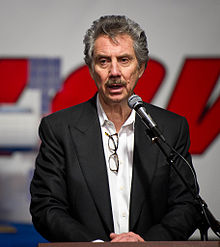
Robert Bigelow
Two men who state they formerly worked on Robert Bigelow's Skinwalker Ranch are expressing concerns they were unwitting research subjects during their employment. Chris Marx and Chris Bartel took to social media and podcasts to voice claims they experienced paranormal-like events at the ranch and that they underwent medical tests they now suspect involved research lacking their knowledge and fully informed consent. 

Marx suggested legal action may be forthcoming:


Bartel on Twitter:


Each of the two men were interviewed by Erica Lukes. More about their claims may also be found at the blog of Keith Basterfield, who is following this developing story. It is yet to be seen how much documentation will be presented to support the statements and allegations made by Marx and Bartel, but the circumstances have the potential to prove interesting.

Concerns about adherence to human research subject protocols arose when a statement attributed to a BAASS senior manager was posted May 4, 2018, by Channel 8 in Las Vegas, the host of controversial reporter George Knapp. The statement asserted BAASS adopted "a novel approach of utilizing the human body as a readout system for dissecting interactions with the UFO phenomenon." It was further asserted that several medical technologies and related tools were used "for in depth study of the effects of UFOs on humans." 

Such circumstances were previously suggested in the now well known NYT article published in December of 2017 that broke the AATIP story. The article stated, "Researchers also studied people who said they had experienced physical effects from encounters with the objects and examined them for any physiological changes," but no details or substantiation were provided.

Information pertaining to the review, approval, and oversight of research involving human subjects is thus far sorely lacking from the vague and anonymous reports. To date there has been no clarification of specifics surrounding the medical exams or whether the work was approved by an institutional review board, or IRB, which ensures adherence to legal and ethical standards. Several FOIA requests are pending which researchers hope will shed light on the methodologies and means of measuring progress of such claimed studies, among many other questions which remain unanswered, and, in many instances, unasked around the UFO circuit.

Non-lethal weapons expert,
former NIDS spokesperson,
CIA consultant, and ufology
influencer, John Alexander
Long before the 2017 article at the Times, select researchers expressed concerns the Skinwalker saga was misrepresented for what might be a number of different reasons and motives from one person to the next. Among the suspected reasons was the possible existence of some type of classified research and development project. 

The suppositions seem bolstered by a 1996 AP article (pictured below) in which non-lethal weapons expert Col. John Alexander, acting as a spokesperson for Robert Bigelow's now dissolved National Institute for Discovery Science, made vague and contradicting statements. Alexander told the AP a mission of NIDS was to make information widely available yet simultaneously declined to provide details of how or why research was being conducted at Skinwalker Ranch.   


"You know, the Skinwalker Ranch to me is interesting for a couple reasons," writer, researcher, and former MUFON International Director James Carrion explained in 2014.

"There's a mythology that was being built up. Why was it being built up? I think it had somewhat to do with the mythology surrounding Area 51. Somebody wants to continue that mythology."

Summing up his thoughts on Bigelow and the Skinwalker Ranch, Carrion added, "All I know is somebody is obfuscating what is really going on, and I don't think it has to do with protecting people's lives [concerning the lack of access and lack of transparency]. I think it's something else."

The funding sources for research conducted at Skinwalker are as unclear as the objectives and outcomes. The Defense Intelligence Agency, which funded the AAWSAP, responded to an FOIA request it has no records pertaining to contracts undertaken with or funding provided to NIDS. 

It may be noteworthy that the FOIA does not require agencies to disclose the existence of properly classified records. It is somewhat feasible such records exist and are classified. 

The National Security Agency, rumored to have been involved at Skinwalker, fully denied an FOIA request for documents pertaining to NIDS and BAASS. "Please be advised that due to security concerns, this is our standard response to all requests where we reasonably believe acquisition records are being sought on a contract or contract related activity," the NSA explained.

Many FOIA requests to the DIA remain pending on BAASS. One FOIA request which was completed, however, substantiates that BAASS was indeed awarded an AAWSAP contract in 2008. Details of what was ultimately delivered are yet to be fully disclosed. The project may eventually prove to have taken place in either part or whole at Skinwalker Ranch, but, as of this writing, that is yet to be established, as is a great deal about activities surrounding NIDS, BAASS, and intelligence agencies. 

Part of an FOIA response from DIA establishing BAASS
was awarded an AAWSAP contract
-----------------------------------

Recommended further reading:

The Carpenter Affair: For the Record 

UFO-Pentagon Story Reflects Fundamental Problems

Monday, September 23, 2019

NSA Denies FOIA Request Pertaining to BAASS and NIDS

National Security Agency, Fort Meade, MD
The National Security Agency fully denied an FOIA request for records pertaining to Bigelow Aerospace Advanced Space Studies and the National Institute for Discovery Science. The Agency advised it is "our standard response to all requests where we reasonably believe acquisition records are being sought on a contract or contract related activity." In a letter dated Sep. 14, 2019, the NSA Initial Denial Authority wrote in part:
This responds to your Freedom of Information Act (FOIA) request of 10 September 2019... for "...copies of all contracts undertaken with and funding provided to Bigelow Aerospace Advanced Space Studies (BAASS) and/or the National Institute for Discovery Science (NIDS). Requested are all reports resulting from contracts granted, project objectives, project budgets, and all related files and information pertaining to relationships between NSA and either BAASS or NIDS. Date range: For NIDS docs would be 1995 to 2004. For BAASS docs would be 1999 to present."... 
Your request has been reviewed by this Agency as required by the FOIA, and is being fully denied in accordance with Executive Order 13526, as set forth in Subparagraphs (e) and (g) of Section 1.4. This request is denied because disclosure could reasonably be expected to cause damage (at minimum) to the national security, per Executive Order 13526, Section 1.2. Any responsive material that may exist would be deemed currently and properly protected; therefore, exempt from disclosure pursuant to the first exemption of the FOIA (5 U.S.C. Section 552(b)(1)).
In addition, this Agency is authorized by various statutes to protect certain information concerning its activities. Accordingly, your request is also denied pursuant to the third exemption of the FOIA, which provides for the withholding of information specifically protected from disclosure by statute. The specific statute applicable in this case is Section 6, Public Law 86-36 (50 U.S. Code 3605). No portion of any responsive material is reasonably segregable. 
Please be advised that due to security concerns, this is our standard response to all requests where we reasonably believe acquisition records are being sought on a contract or contract related activity.

Rumors have long circulated about the relationships between controversial philanthropist Robert Bigelow and intelligence agencies. The revelations of his involvement in the AATIP, and BAASS acting as a conduit to secretly provide funds from the Defense Intelligence Agency to the Mutual UFO Network, certainly added fuel to the fire.

Robert Bigelow
Relationships between Bigelow and figures such as non-lethal weapons expert and former NIDS employee Col. John Alexander, and veils of secrecy surrounding work conducted at the now fabled Skinwalker Ranch, have been questioned. Various incidents added to the speculation, including a 2012 interview with "Chip," a man who claimed to be formerly employed at the ranch and stated he saw a copy of a contract between Bigelow interests and the NSA.

Perhaps no circumstances have called the motives of Bigelow and his colorful staff into question, however, as much as their perpetual lack of either willingness or ability to follow through on claims. Bigelow's band of scientists and researchers are notorious for making huge statements and insinuations while failing to provide adequate supporting evidence. 

Just days ago, a Twitter account for Bigelow Aerospace posted a video clip of what appears to be dust or debris commonly mistaken for "orbs", implying the footage had some type of significance. To the best of my knowledge, the company has yet to clarify any details of the situation or film. 

Writers and filmmakers have added to the confusion, frequently representing Bigelow-related research as indicative of the paranormal, but, as is the case with his personnel, tend to be short on substance when asked for citations. Jeremy Corbell particularly claimed a DIA involvement at Skinwalker Ranch, but did not respond to a request for clarification. An FOIA request submitted to the DIA resulted in a response that the Agency had no documents pertaining to contracts with or funding provided to NIDS, the Bigelow corporation attributed with conducting research at Skinwalker.

Several FOIA requests remain pending with the DIA and other agencies pertaining to the AATIP.

-----------------------------------

Related and recommended:

DIA Withheld AAWSAP Contract Awarded to BAASS in 2011 FOIA Response

DIA: No Docs on NIDS

UFO-Pentagon Story Reflects Fundamental Problems

The Carpenter Affair: For the Record

Monday, September 16, 2019

FBI Had Interest in Flickinger Contacts

FBI files linked below at keepandshare may also be viewed at Google Drive here and here

Gen. Donald D. Flickinger
One of two files recently received from the FBI indicate the late Gen. Donald D. Flickinger landed on the Bureau's radar in 1964, when he was interviewed about his knowledge of a European-born woman employed as a hostess at an exclusive D.C. restaurant. The second file pertains to a rental car parked near the Soviet Embassy in 1969 which became of interest to the FBI and was subsequently established to be rented by Flickinger. The files were obtained in response to an FOIA request seeking records on Donald Davis Flickinger. 

The FOIA request was submitted following a blog post by Keith Basterfield in which he explored the possibility Flickinger acted as a mentor to Dr. Kit Green on information related to UFOs. The controversial Dr. Green is a long term ufology staple with a CV that includes the Central Intelligence Agency and Robert Bigelow's now dissolved National Institute for Discovery Science. Asked for comment on Basterfield's blog post and Flickinger serving as a mentor, Green responded in a Sep. 16 email:
I am very willing to tell you, and for you to pass on to Keith that in my judgement he is the finest Forensic technically sophisticated HUMINT researcher & analyst I have ever seen in this field. At or even slightly over 95% of his conclusions about me have been correct. I am unable legally or ethically to confirm any correct or occasionally, rarely incorrect inclusions. 
I respectfully will not confirm or deny any sources to whom I have pledged privacy. 

Donald Flickinger was an Air Force general and a surgeon. According to a CIA report, he acted as the medical adviser for Project AQUATONE for over a decade. 

In his blog post, Basterfield recapped how Green stated during a recent interview that an individual, acting as a mentor, repeatedly alluded to Green about crashed UFOs and such. The individual also, according to Green, committed to obtain security clearance for Green to access the information but never actually did. Basterfield conducted research which led him to believe it likely the person in question is the late Gen. Flickinger.

One file obtained contains an FBI report from 1964 surrounding activities of Jeannine Cusson, a woman the Bureau described as born in Poland. She entered the States as the result of marrying an American soldier and was later divorced. The FBI noted Cusson's "employment provides an ideal position for her to meet and spot highly placed individuals connected with U.S. and foreign intelligence services."

Flickinger told the Bureau he had known Cusson since 1957, and that he and his wife became quite friendly with her. The report continues:


Flickinger is documented as describing a relationship between Cusson and Dr. W. Randolph Lovelace, a longtime friend of the Flickingers who, like Flickinger, was involved in aerospace medicine and related industries. Flickinger apparently acknowledged Cusson was in an ideal position to assist Soviet representatives but clarified he did not believe this to be the case.

In the past we explored situations in which it seemed likely the topic of UFOs was used as a tool to deceptively gain the trust of people issued employment-related security clearances. Through the decades, there have been rich opportunities for such exploitation. Specific instances that seemed intriguing enough to attract concern of the intelligence community include such cases as Boyd Bushman and Vincente DePaula

We also blogged about a memo composed by an NSA assignee who advised his supervisors of inquiries posed to him and questionable behavior of researchers at a 1978 MUFON Symposium. Circumstances become complex, but the larger, global context of intelligence operations should be taken into consideration when the topics of UFOs and the intelligence community converge. That's practically any UFO conference, as well as inherent to many of the issues of interest around the UFO blogosphere.

A second file obtained from the Bureau describes intelligence gathered on unidentified subjects visiting the Soviet Embassy located in Washington, D.C. Subsequent investigation by the FBI revealed the vehicle used was rented by Flickinger. 

The Special Agent in Charge who composed the 1969 report described Flickinger as having contact with "Soviet and Satellite representatives" regarding technical conferences. Flickinger was known to the Washington Field Office in such capacities, it was explained, making it seem likely Flickinger was the driver of the unknown subjects to the embassy for business connected purposes.

The Special Agent concluded, "It appears from the composite description provided by lookout personnel it is doubtful that Flickinger entered the Embassy. Since no photos of Unsubs [unidentified subjects] exist, the only possibility of identifying Unsubs is through interview of Flickinger.

"WFO [Washington Field Office] will do so UACB [Unless Advised to the Contrary by the Bureau] under the pretext of an automobile accident in the vicinity... involving a government vehicle."

Follow-up FOIA requests were submitted pertaining to Cusson, Lovelace, and possible further investigations.

Researchers who explore the ways the topic of UFOs has been exploited by espionage and counterespionage operations may not have all the details right, but they don't have them all wrong, either.

Wednesday, September 11, 2019

Data Is King

All kidding aside, we have spy satellites that can see a pimple developing on my forehead. I'm kinda guessing the Navy already knows what these so-called UAP's are.
- Keith Kloor, Twitter

The admirable and persistent work of John Greenewald recently added a couple more shades of intrigue to the TTSA kaleidoscope. The U.S. Navy denied the three videos touted by TTSA were cleared for public release, backing up the previous statements from the Pentagon, while labeling the objects depicted in the film clips as unidentified aerial phenomena, or UAP.

Greenewald reported Joseph Gradisher, official spokesperson for the Deputy Chief of Naval Operations for Information Warfare, explained, "The 'Unidentified Aerial Phenomena' terminology is used because it provides the basic descriptor for the sightings/observations of unauthorized/unidentified aircraft/objects that have been observed entering/operating in the airspace of various military-controlled training ranges." 

A lot seems to have been read into that statement, much of which, in my opinion, is based on what the reader chooses to see. Interpretations such as "they're admitting they're not ours" and "they finally acknowledged they're UAP" are making the social media rounds. 

I understand why UFO enthusiasts are excited. The DoD and the Navy are talking about UFOs - a lot - but the concepts being wishfully attributed to the Navy spokesperson are not what he said, not exactly. In this post let's consider a few things about this never ending story. 

After all, if you can't trust the Information Warfare Center to catapult us into UFO Disclosure, who can ya trust?

History

A lot of spooks emerged out of the IC and waded into the UFO pond over the years. Some particular notables include Adm. Roscoe H. Hillenkoetter, who directed the CIA prior to serving on the Board of Governors for the National Investigations Committee on Aerial Phenomena from 1957 to 1962. A fellow NICAP board member was Col. Joseph Bryan III, who, interestingly, was "later discovered to be a former naval officer and CIA employee, psychological warfare specialist," according to researcher Richard Hall.
  
DCI Hillenkoetter led to what would be a long line of current and former intelligence professionals moonlighting in ufology. The list includes Gen. Bert Stubblebine, credited with redesigning the intelligence structure of the entire U.S. Army, Col. John "Mr. Non-Lethal" Alexander, Comdr. C.B. "Scott" Jones, who claimed he believed his friend was targeted with a mind control weapon by the FBI, the enigmatic and UFO forum-present Ron Pandolfi, infamous Richard Doty, and many more, including, of course, Luis Elizondo and a number of intriguingly successful members of the IC prior to boarding the TTSA train.

Long before current Information Warfare spokespeople indirectly implied reasons the Navy revised its UFO reporting procedures - somewhat contradicting a DoD explanation the AATIP was axed due to higher priorities more deserving of funds, no less - intel analysts sometimes used the levels of concern of their commanding officers as indicators of how much attention they should give potential threats. That included matters of what, today, we might call UFOs or UAP.

James Carrion documented per declassified memos and reports how the 1946-47 Ghost Rocket flap involved professional analysis in which it was suspected senior officers were, in reasonable likelihood, well aware of the origins of the reported rockets. Numerous reasons were given to that effect by intelligence analysts, as well as an FBI Special Agent in Charge, which included a lack of concern for the rocket reports from the brass. Also observed was a lack of calling personnel back from leave during intense portions of the supposed threat. This curiously happened while the press was simultaneously offered official statements of concern and provided stories pertaining to the rocket sightings.

We might consider the circumstances somewhat comparable to a so-called Pentagon UFO program which was reportedly discontinued, yet select personnel persist in publicly warning us - and an accommodating media - of airspace incursions. At the least, I'd argue it should be taken into consideration.

Data Talks  

Most importantly, there is no substitute for verifiable data. Evidence available for public review: that's the name of the game. Unfortunately, those claiming to be leading Disclosure are much more often than not obstructing the purported evidence. They are long on claims and short on data.

There have been vague and anonymous news reports about taxpayer-funded examinations of UFO witnesses, modified buildings for storage of UFO debris, reports of UFO research projects existing both before and after the AAWSAP and AATIP, and too many more fantastic claims to list, little to none of which has been substantiated. There are discrepancies about who ran the projects, what the projects were empowered to do, if anything of value was learned, if the research was properly approved and overseen by official boards, and it's not clear how much, if any of it, is even classified or not. Several FOIA requests are pending.

Maybe Disclosure of extraordinary things is on the horizon. I guess ya never know for sure. If not, hey, there's always that statement about UAP from the Naval Operations for Information Warfare.

Wednesday, August 7, 2019

Wicked Webs: Media Portrayal of Tall Tales, TTSA and Luis Elizondo

Leslie Kean
In the much celebrated Dec. 16, 2017 story at the New York Times, authors Helene Cooper, Ralph Blumenthal and Leslie Kean wrote about the Advanced Aerospace Threat Identification Program (AATIP). Many of the assertions published in the article remain unconfirmed. "It was run by a military intelligence official, Luis Elizondo, on the fifth floor of the Pentagon’s C Ring, deep within the building’s maze," they reported.

Frank Warren attempted to learn more about what led Kean and Blumenthal to report Elizondo ran the AATIP. In an Aug. 5 post at The UFO Chronicles, Warren explored the AATIP saga and explained how he specifically asked the two if they would at the least describe the nature of the evidence and how it was authenticated. They did not. 

"So after a couple of weeks and 5 attempts I received a five-word, one-sentence reply, sending me back to the article whose omissions precipitated my query to begin with," Warren wrote.

After several emails, Kean told Frank Warren to ask Blumenthal. Blumenthal eventually stated the two stand by their reporting. Neither remotely addressed Warren's original questions pertaining to what evidence was reviewed that indicated Elizondo ran the AATIP.

Warren concluded:
Above I asked the proverbial question, "does any of this matter?" The short answer is yes, of course it does. This is research 101; thorough investigation and due diligence performed by sober researchers should be commended, not criticized. Facts don’t lie. Moreover, and particularly in this instance, when contradictory information to this degree, i.e., divergent statements from the Pentagon re Elizondo’s claimed credentials are uncovered, then this must be resolved.
All the same, I can’t for the life of me understand why Luis Elizondo has not got in front of this. If everything is as he says, then certainly he can provide evidence to put this controversy to bed once and for all, unless…. 

Helene Cooper, Ralph Blumenthal and Leslie Kean were each offered an opportunity to comment for this blog post. None responded.

Nearly two years now since the initial Times article, many important details remain unverified. Not only have the initial assertions received little to no follow up, but more articles were published about TTSA while ignoring mounting discrepancies.

Tom DeLonge
In a June 4 piece at Rolling Stone, Tom DeLonge was asked how it felt to see the latest story on TTSA in the Times. He replied, "This is the third New York Times article that we organized and put together at To the Stars." 

It's entirely reasonable to ask, exactly, what that means. Public trust in media objectivity surrounding TTSA continues to plummet while concerns of false narratives seem more justified with each successive question. In addition to a credulous (if not blatantly deceptive) network of reporters, a small army of self-described journalists and so-called persons of knowledge emerged on blogs, podcasts, and social media to uncritically - painfully so, at times - promote TTSA. Many would argue the organization and its high profile supporters have not earned such unconditional loyalty. 

Credulous or Complicit?

Leslie Kean and Ralph Blumenthal's work has previously been called into question, and Kean has a rather well documented history of jumping the shark. It is yet to be understood why the New York Times does not take this into account and more carefully require evidence for assertions prior to publication. 

In 2012 Kean and Blumenthal co-authored a quite sensational piece on a now infamous 2010 Chilean airshow in which they reported jets were stalked by a UFO - that no one actually saw until viewing film later. The article included suggesting this was the UFO case skeptics had been dreading. Before long the hyped case fell apart under circumstances which called motives and competency into question. 

Researchers pointed out many areas of concern, such as Kean's claims the UFO was captured on some seven different videos from differing angles, yet she failed to produce the alleged corroborating videos. Additional film footage was indeed located by an independent researcher, which significantly contradicted Kean's stance, rather than supported it. The footage showed what were obviously insects and birds to be prevalent throughout the newly located film, circumstances which could not be seen in the arguably misleading and much more limited film samples previously released. Many in the UFO community eventually questioned how Kean, Blumenthal and Chilean authorities could have been oblivious to the likely explanation of insects, while rather inexplicably silent about additional and extended footage that so clearly established an abundant presence of airborne wildlife throughout the event. 

Prior to going overboard on the airshow, it was documented in 2011 how Kean rejected and completely ignored evidence contradicting her preferred narrative of an alleged cover-up of the JAL 1628 UFO case. Kean was provided witness testimony of two people, both who attended a meeting in which the cover-up was supposedly discussed, yet each person indicated no such statements were made. As a matter of fact, one of them stated they were provided information for publication during the meeting. Kean completely omitted the circumstances from her description of the events while opting to continue to promote the cover-up version of the story, among other reported questionable actions.

Amateur hypnotist and alien abduction
investigator Budd Hopkins conducting
regressive hypnosis
Going back even further, as documented by Carol Rainey and later explored in The Greys Have Been Framed: Exploitation in the UFO Community, Kean endorsed Budd Hopkins in his promotion of alleged alien abductee James S. Mortellaro, Jr. The sensational case was destined to be identified as a hoax. 

The absurd and unverified claims of Mortellaro - in addition to his baseless stories of being celebrated for heroic action as a police officer - included his assertions he was examined by medical doctors who substantiated his tales of alien abduction. He also claimed witnesses could verify his abductions. The evidence was perpetually promised to be forthcoming but chronically never produced, as seems to be a recurring theme.

Without personally interviewing or ever even speaking with any of the alleged witnesses or medical staff who could purportedly substantiate the case, Kean and Hopkins were on board with Mortellaro's story. It unraveled in whole when Rainey, a writer, filmmaker, and then-wife of Hopkins, along with members of an advisory committee of the Hopkins-founded Intruders Foundation, refused to entertain the empty claims of medical documentation any further until substantiated. 

An alleged medical document handed over by Mortellaro, along with other supposed evidence, was identified as fraudulent. A statement was subsequently published on the Intruders Foundation website which clarified the case was not worthy of further investigation. The statement established the purported credible evidence long promised to be forthcoming was never produced and that alleged official medical documentation was fabricated.

It could be argued if select UFO researchers can hold credulous investigators and those with mile-high tales responsible for providing evidence to support their assertions, then we should expect the same from other researchers. We might particularly require such standards from journalists and, certainly, the "Paper of Record."

How We Got Here

Luis Elizondo
Bryan Bender of Politico also reported Luis Elizondo formerly ran the AATIP in an article published virtually simultaneously with the piece by Cooper, Blumenthal and Kean. Bender wrote that Pentagon spokesperson Dana White confirmed the program existed and was run by Elizondo. White could not say how long Elizondo was in charge, Bender added, and that she declined to answer detailed questions. 

Journalist Keith Kloor raised substantial doubts about Elizondo, AATIP leadership, and those promoting the story in his June 1 article published at The Intercept. Kloor pointed out Bender's source, Dana White, was a Trump administration political appointee who resigned amid an internal probe into charges of misconduct.

Moreover, Kloor quoted a current Pentagon spokesperson, Christopher Sherwood, as stating, "Mr. Elizondo had no responsibilities with regard to the AATIP program while he worked in OUSDI (the Office of Under Secretary of Defense for Intelligence) up until the time he resigned effective 10/4/2017." 

The relevance of Elizondo's lack of AATIP responsibilities while specifically working in OUSDI is significant because Sherwood's statement directly contradicts information provided on the record by TTSA spokesperson and Tom Delonge sister Kari DeLonge. She stated it was out of that office that Elizondo ran the program starting in 2010.

Christopher Sherwood further clarified his statement for Kloor, explaining how he arrived at his conclusion. Sherwood spoke with OUSDI leadership, Kloor reported, which included individuals who are still there from the time Elizondo started working in the office.

Kloor covered statements made during a podcast by Helene Cooper, the Pentagon correspondent for the Times and co-author of Kean and Blumenthal. Kloor wrote, "Later on, after she left [a meeting with Elizondo], Cooper acknowledged that doubts crept in. In the end, though, she decided that what mattered most was whether the Pentagon’s UFO program was real. That, she said, was the focus of the story."

Politico defense editor
Bryan Bender
Sherwood's statement and the current DoD position on Elizondo's employment history obviously came in contradiction to the narrative held by Bryan Bender. He asserted on Twitter he could provide documents to support Elizondo's claims of running the AATIP. However, when encouraged to do so, Bender presented no such documents and later deleted the tweet.

Bender deleted another tweet, as reported by John Greenewald at The Black Vault, in which he assured Twitter the Pentagon would soon revise its position on Elizondo's lack of AATIP involvement. However, the opposite proved true when the Pentagon actually reiterated its stance that Elizondo did not, in fact, have any assigned responsibilities for the AATIP while working in the OUSDI.

In an interview published July 9 with TTSA loyalist Alejandro Rojas, Bender stated Elizondo's role in the AATIP has been difficult to confirm because "you can't really do that." The Politico editor once again spoke of unspecified documents and knowledgeable staffers but provided listeners with no answers to lingering and valid questions. Bender explained that he suspected a substantial amount of Elizondo's UFO investigations were in unofficial capacities and subsequently cannot be verified. 

"[T]here really wasn't an AATIP, officially," Bender added, which does not seem entirely accurate, according to Pentagon statements and a great deal of research conducted by various bloggers. 

"I mean, that's just not how the intelligence business works," Bender stated about difficulty following paper trails and identifying project personnel.

Part of letter DIA issued to BAASS
concerning the AAWSAP
Many would challenge Bender's portrayal of Pentagon programs. As part of a recent FOIA response, the DIA provided The UFO Trail a letter it issued to Bigelow Aerospace Advanced Space Studies (BAASS). The letter further established what many researchers already knew: Pentagon programs contracted to private corporations are not exempt from either paper trails or the FOIA process. 

The FOIA request was pertaining to a 2008 contract awarded for the Advanced Aerospace Weapons System Application Program, or AAWSAP. The letter demonstrated BAASS was notified of an FOIA request concerning its contract, as is required by executive order, and offered a standard opportunity to suggest portions of the contract be withheld, pending justifications.

Early in the interview with Rojas, Bender suggested he perceived a lot of early statements from TTSA panned out so he began giving its personnel benefit of the doubt. It could be considered interesting that many came to form the exact opposite assessment.

It is reasonable to question why the initial stories at the NYT and Politico reported Elizondo ran the AATIP. Bender's rationalizing about the difficulty of confirming Elizondo's claims does not justify publishing his and TTSA statements as fact. It arguably makes it all the more apparent not to report the statements as facts.

Adding to the controversy was a May 22 article written by Steven Greenstreet for the New York Post. We previously explored the piece and that it was Greenstreet who initially received Pentagon spokesperson Christopher Sherwood's statement about Elizondo having no AATIP responsibilities, and Greenstreet opted to omit it from his article. Instead, he framed the piece as a pro-UFO read while later declining to reveal the contents of Sherwood's full statement when requested to do so. The irony of such actions by journalists advocating government disclosure of UFO information should be self evident.

The Videos

Sherwood's full statement, when obtained independently and able to be viewed in its entirety, further called into question the already controversial chain of custody of the videos published by TTSA. The videos became the cornerstone of TTSA claims of being a leading and significant group. Also omitted from Greenstreet's article, along with the comment about Elizondo, was Sherwood's statement, "The video[s] you reference in the NY Times article was made releasable for research and analysis purposes by U.S. government agencies and industry partners, and not for general public release." The remark is significant to the DD1910 issue and deteriorating credibility of TTSA, which long claimed to have "chain of custody documentation" but has yet to produce it. 

George Knapp, a longtime prominent UFO reporter who uncritically promotes the Skinwalker Ranch legend and holds steadfast to the legitimacy of claims surrounding Robert Bigelow and Bob Lazar, "obtained" and published the DD1910 on April 29. A DD Form 1910 is used to request review and clearance of material, in this case the videos later framed as evidence of UFOs by TTSA. Knapp proclaimed the DD1910 established provenance of the film clips. It actually did not, which is particularly ironic, given the fact Knapp had no provenance for the form itself.

DD1910 posted by Knapp
While the Pentagon later confirmed to John Greenewald the DD1910 in question was authentic, spokesperson Sue Gough further explained the videos were never authorized for public release. It remains unclear how the film footage came to be published.

Additional areas of concern surrounding the DD1910 published by Knapp included redacted sections, apparently done by parties other than the DoD, which obstructed the name of the requester. It was also questioned why the subject of the videos were listed on the form as UAV (Unmanned Aerial Vehicle), balloons, and UAS (Unmanned Aircraft System). In other words, the DoD labeled the objects filmed as drones and balloons.

It was reported by Sarah Scoles at Wired on Feb. 17, 2018 (and known by people familiar with UFO forums), that some of the TTSA footage was posted online years earlier. Scoles raised several interesting questions about the original purposes of the videos, such as the doubt they were ever classified.

"It looks very strongly like these weren’t released through any proper DOD declassification channels that I’ve ever seen," Nate Jones, director of the Freedom of Information Act Project at the National Security Archive, told Scoles. "I’ve seen a lot of DOD declassification in response to FOIA, in response to mandatory declassification review, in response to proactive disclosure. And it doesn’t look like this."

Scoles went on to aptly observe there is no definitive connection between the video footage showcased by TTSA and the AATIP. It indeed might be competently argued that the unconditionally loyal UFO reporters are the lone reason the TTSA videos - and Luis Elizondo - were ever associated with the project at all. 

Knapp soon posted a screen shot of another document lacking provenance when he offered it in support of Elizondo following Kloor's June 1 article at The Intercept. Knapp's document seemed to raise more questions than it answered and, once again, actually resolved nothing. As a matter of fact, it remains unresolved as of this writing as to whether or not Luis Elizondo ran the AATIP or ever had any official responsibilities in it. 

While evidence may eventually be presented that indeed establishes the specific relevance of the videos to the AATIP and Elizondo's involvement in the project, the fact of the matter is that is not currently the case, and two Pentagon spokespersons definitively stated he had no responsibilities in it at all, much less ran it. To claim otherwise at this point is simply wrong.

Elizondo, TTSA, History Channel (which aired a TTSA series), and affiliates have largely remained quiet about his unverified credentials, a silence of particular concern among many researchers and journalists. If the videos were released through proper channels and if Elizondo ran the AATIP as repeatedly asserted, why wouldn't he and those who reported it just provide documentation? Wouldn't they have such documentation in hand before ever making the assertions? One might be inclined to think so, but, to state the obvious, it is becoming increasingly doubtful. That might particularly be considered the case the more time that passes without TTSA and its fraternity of writers resolving what have become many issues of baseless claims.

In a June 7 interview with Martin Willis, the first public statement Elizondo offered on his credentials since Kloor's article at The Intercept, Elizondo told Willis, "Everyone's entitled to their own opinion." It is just such ambiguity that draws criticism to TTSA and deeply alarms researchers who respect standards of evidence. In order to give Elizondo the benefit of the doubt for such a statement, he would have to genuinely fail to identify a significant difference between substantiating a claim of directing a Pentagon UFO program and choosing a flavor of ice cream.

Bottom Line


It is reasonable for people to be interested in reports of UFOs and related phenomena. They are entitled to believe as they want and loyally follow researchers as they choose. It is understandable they are excited about their topic of interest receiving increased coverage.

Similarly, those who prioritize accuracy are entitled to respect professionally recognized standards of evidence when forming their beliefs. They are free to reject or suspend judgement on claims which fall short of such standards, pending further, more conclusive information. That might particularly be considered justified when such claims are prematurely and falsely published as facts.

It should go without saying, but seems to constantly need reiterating, that extra skepticism is warranted towards reporters who have documented histories of sensationalizing UFO stories and being shown to be wrong upon further investigation. If this stuff is worth following, it's worth getting right, or perhaps it's not worth following at all.