Reports
from Project Core were recently published at projectcore.net.
The
project was a professionally conducted research endeavor in which
written testimonies of paranormal experiences from over 200 individuals were
obtained via surveys and considered at length. Questions were posed
to respondents in which trends in responses could be analyzed.
Several avenues for potentially productive future research were
subsequently identified.
Project
Core team members included self-described experiencers of paranormal
phenomena Jeff Ritzmann and Jeremy Vaeni. Working on the project were
also Dr. Tyler A. Kokjohn, Dr. D. Ellen K. Tarr and Dr. Kimbal E.
Cooper.
I have
read all material posted on the Project Core website. After having
revisited the reports and commentaries a few times, and feeling that
I have reasonably processed the data and observations contained
therein, I feel there are some important points.
 |
| Science pioneer Aristotle |
Among the more relevant observations, in my opinion, is that such a project is
most certainly possible within the UFO and paranormal communities.
Not only does Project Core contradict popularly held assumptions
that science is unable to systematically and competently address reported paranormal phenomena, but it also demonstrates that self-described
experiencers and professional researchers can collaborate on such
ventures.
That
leads us to another important point I considered as a byproduct of reviewing Project Core: Extreme opposite camps within
ufology, which I will for the time being label "unquestioning believers" and "stubborn debunkers", share responsibilities for collective
tire-spinning. Futility rests on the shoulders of both demographics, not
just one or the other.
Unquestioning Believers
Obviously,
unquestioning belief is unattractive to critical thinkers. It is easy
to see how claims of vacuum cleaner nozzles on the surface of Mars
might lower public interest in the UFO genre, at least among those
some of us might prefer be drawn to it.
 |
| Retired historian David Jacobs |
In
addition to those who consistently try to direct our attention to interpretations of photos at craptastic dot com, the unquestioning believer side of the scale also
includes individuals and organizations which manipulate and shape
those poorly conceived beliefs. That would
include alien-hunting hypnotists that sell their clients' data
without consent, historians that recommend chastity belts to their research subjects, and the
organizations that provide them venues to promote their unsupported
claims while prospecting for more people to exploit.
There is
even much more to it than that, though. Among the additional harmful
social dynamics is a cultism that quickly embraces newcomers seeking
credible information. In return for courageous open-mindedness,
newcomers are often bombarded with assurances that everyone abducted
by aliens had difficulty accepting it at first. The pseudo recovery
might include suggestions to attend meetings purported to provide
emotional support which, in actuality, serve to spread such beliefs
inherent to the genre as big news about an alien presence will be
released any day by the White House. One might also get indoctrinated
with a lot of material that will assure future hypnosis sessions would go as
hoped.
If one
is fortunate enough to get out of a recon mission into the UFO
community without landing in front of a rogue hypnotist and author
masquerading as a therapist, they can cut their losses and return to
a life where they keep relatively quiet about those 'something weird
happened one time' stories. If not that fortunate, well, then they
have a whole lot more emotional baggage to carry and healing to do
than they started with – and that's if they're wise and brave
enough to consider that many of those "helpful" UFO people have
no idea whatsoever what the hell they're talking about.
So the
unquestioning believer demographic has many detrimental aspects. One
of the most damaging is that its members are prone to interpreting
the experiences of others and thinking themselves qualified to
explain them in outrageously assumptive detail. The bottom line is
that people of higher intelligence and emotional availability don't
want other people trying to tell them what happened to them who have
no idea and don't even know they don't.
Stubborn Debunkers
The
stubborn debunkers conduct a different, but nonetheless detrimental,
brand of bait and switch. They often try to lead newcomers to believe
they promote skepticism and rationality when, in actuality, they can
be among the most opinionated, dogmatic demographics one might ever
encounter. Healthy skepticism is a very good thing - I would
confidently say entirely necessary - but it is nowhere to be found
among stubborn debunkers and despite their claims to the contrary.
They
make fun of people who hold ideas and beliefs different than their
own, employ sarcasm as a preferred mode of expressing themselves,
and, by and large, do not even conduct research – they just
criticize and make light of others who do, unless it happens to
support their preferred perspective. They virtually never address a
topic of which they are unwilling to offer speculative conclusions,
and they fail miserably at asking the right, productive questions.
 |
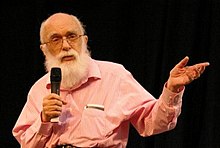
| Self-described skeptic James Randi |
In his
1992 paper, 'CSICOP and the Skeptics: An Overview', writer/researcher George P. Hansen observed that facets of the
organized skeptical movement opted to employ an extended public
relations campaign rather than conduct research. "These
activities display more parallels with political campaigns than with
scientific endeavors," Hansen wrote. His paper frequently came
to mind while reading Project Core and considering how the project
embodied what professional research conducted by competent and
qualified individuals actually looks like and is capable of producing.
Stubborn
debunkers typically attempt to minimize reported experiences of high
strangeness or conspiratorial implications by employing any number of
explanations that might indeed be applicable in some circumstances,
but do not necessarily apply to a case at hand. While the burden of
proof indeed falls upon one asserting a claim, the fact of the matter
is that a more discerning group of experiencers and researchers do
not assert claims, but simply question. The bottom line - again - is
that people of higher intelligence and emotional availability don't
want other people trying to tell them what happened to them who have
no idea and don't even know they don't. Same as with the
unquestioning believers. Whether one's field of interest includes
psychic phenomena, entities, the intelligence community or most
anything else, they should prefer to allow facts lead them to
conclusions, not lobbying techniques.
Professional Research
So to
tie this together, the UFO community consists of demographics with
virtually polar opposite beliefs but each detrimentally effecting the
paranormal genre in similar manners: They try to lead others to
believe they are able to explain things to them of which they
actually have little idea, are frequently unfamiliar with relevant
material and are often not even qualified to venture an intelligent
guess. People therefore become very reluctant to share their ideas
and experiences for various different reasons, not just the well
known fear of ridicule invoked by stubborn debunkers, but also
because they don't want unquestioning believers saddling their reputations with wild and
disturbing rumors based upon little more than questionable interpretations of reality.
And that
is what's different about Project Core. I could tell you a lot of
things it's not, but here's what it is: An objective and professional
assessment of experiences reported by over 200 individuals, as well
as assessments of answers provided to a series of specific questions.
The only stipulations for reporting experiences were to provide
sincere accounts, no matter how bizarre the perceived events, and to
not submit any information obtained via hypnosis.
Researchers
demonstrated a full awareness that surveys obtained did not
necessarily contain accurate information, but might at times be more
representative of what respondents interpreted, such as in the cases
of reported physiological circumstances and perceived
experiences. Data was professionally organized and presented, with
much careful consideration given to patterns and correlations that
seemed to emerge.
About a third of
those surveyed indicated multiple witnesses were present during the
events. Taking into consideration that many respondents reported multiple experiences,
researchers suggested that future events might be accurately
anticipated. A number of additional avenues for future research were also identified, including the implementation of cost effective technological advances.
It was
also apparent that researchers of alleged alien abduction have
largely failed to explore the cases of witnesses who have unaided
conscious recall of events. Pursuing such witnesses, while ceasing to
rely upon regressive hypnosis as an investigative tool, was strongly
suggested.
 |
| Research or brain scrambling? |
Yet
another emerging point was that respondents largely felt their
experiences have not been portrayed accurately in media. Researchers
considered that assertion might be due to the more bizarre aspects of the
reports being frequently omitted by those portraying the experiences
to the public. Readers were additionally free to surmise that ill
advised use of regressive hypnosis, and leading of witnesses by
biased hypnotists and investigators, likely play major roles in such
inaccurate media portrayal. While reading Project Core reports, it
seemed entirely possible to me that the common abduction narrative
is, in reality, a rather small percentage of reported experiences, if
not largely inaccurate and unreported. At the least, it appeared
reasonable to question if the stereotypical alien abduction narrative is a very
poor representation of what people perceive themselves to be
experiencing.
I
recommend reading the material posted at Project Core. There
are several intriguing points and interesting insights.
But
mostly I recommend it because it serves as a model of what
professional research of reported paranormal experiences looks like. Pro research is
pro research. Everything else is not.